Operations | Monitoring | ITSM | DevOps | Cloud

Database governance in the AI era: Framework, risks and best practices

AI database governance can get overlooked when teams rush to connect AI tools to production data. IBM’s 2025 research found that 97% of organizations that reported a breach involving an AI model or application lacked proper AI access controls. The risk is easy to see. Give an AI agent too much access and it can expose or alter data in seconds. Feed it poor-quality data and it may produce a confident but incorrect answer.

What's new in dbForge 2026.2: New PostgreSQL Debugger, visual editors, broader context for AI Assistant, and much more

Here comes dbForge 2026.2, a new release of our ever-evolving ecosystem of AI-powered database lifecycle management solutions—and it’s packed with useful updates you definitely shouldn’t miss! These include a brand-new embedded PostgreSQL Debugger in dbForge Studio, handy visual object editors for PostgreSQL, broader context awareness in dbForge AI Assistant, enhanced SQL development and schema comparison capabilities, and a new, simplified product activation flow.

What is PostgreSQL? Features, uses, and benefits

The PostgreSQL database went from a platform developers respected to the one they reach for first. Today, it’s used by over 55.6% of all developers and 58.2% of professionals, powering everything from SaaS startups to AI platforms. For many new projects it’s now the default choice. But what pushed PostgreSQL ahead of so many alternatives? This guide answers that question by explaining what PostgreSQL is, how it works, and what makes it different from other databases. Table of contents.

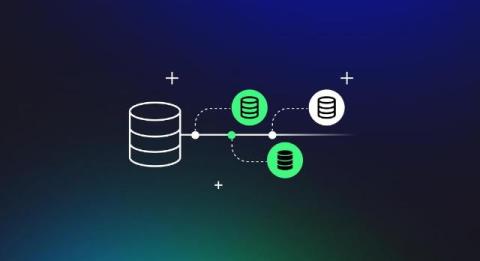
Database Branching Explained: How It Works and When to Use It

Database branching solves a strange mismatch in modern development: code gets its own branch, but the database often doesn’t. Developers can work independently in Git, then end up sharing the same development database, waiting for a fresh copy, or trying not to break each other’s schema changes. The result is a lot of database sprawl.

More Power for .NET Developers: New Releases Across dotConnect and Entity Developer

We are excited to announce a new wave of updates across our.NET data connectivity and ORM product portfolio, delivering enhanced security, broader platform support, modern SQL Server compatibility, AI-ready capabilities, and productivity improvements for.NET developers.

MCP Servers 1.1.0 Add Flexible HTTP Routing and CLI Connection Management

We are pleased to announce the release of MCP Servers 1.1.0, bringing new configuration options for HTTP-based deployments and expanded command-line capabilities for managing database connections. The new version makes it easier to control how MCP Servers are exposed over HTTP, host multiple MCP Servers under a single hostname, and configure connections directly from the command line.

Will AI agents replace database IDEs? The future of database development

AI is already good at writing SQL, which is why people keep asking whether AI agents will replace database IDEs. But letting an agent work on a production database is still a much bigger leap. In tests reported by BIRD, a text-to-SQL benchmark built from 95 real databases across 37 professional domains, human experts reached 92.96% execution accuracy. The best single-model entry reached 80.04% in June 2026. The model failed roughly one task in five; the humans, about one in fourteen.

13 best practices for database development in Visual Studio 2026

Database development rarely breaks all at once. It happens through small changes that seem harmless at the time. Someone adds a column directly to the shared database. A stored procedure gets fixed in production but not in the project. An index is created in staging and never added anywhere else. Everything looks fine until the next release. Then the differences start showing up, and nobody is quite sure which version of the schema is correct.

SSIS Data Flow Components Update Brings Expanded API and Data Source Support

The latest release of Devart SSIS Data Flow Components expands support for cloud applications and databases with new objects and fields, updated API and metadata support, and improved authentication and data access capabilities across multiple connectors.

Devart Excel Add-ins Extend Connectivity With New API, Security, and Data Support

We are thrilled to announce an update to our Excel Add-ins, bringing expanded support for popular cloud services and databases. The release introduces new objects, fields, API capabilities, and authentication options for BigCommerce, FreshBooks, HubSpot, NetSuite, QuickBooks Online, Zoho CRM, Oracle, MySQL, and PostgreSQL.