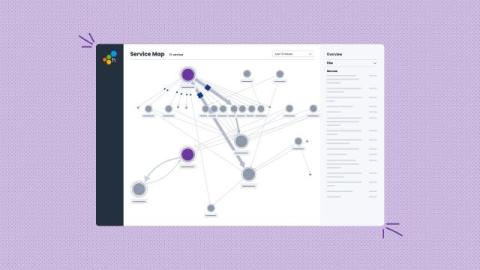
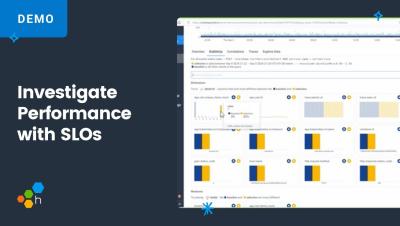
See how Honeycomb gives you quick insight into web site performance, including Honeycomb gives you the metrics you need to see, and all the context you need to improve them.
The CoPE is made to affect, meaning change, how things work. The disruption it produces is a feature, not a bug. That disruption pushes things away from a locally optimal, comfortable state that generates diminishing returns. It sets things on a course of exploration to find new terrains which may benefit it more—and for longer.
In my last blog post, I explained why we decided to destroy one third of our infrastructure in production just to see what would happen. This is part two, where I go over the big day. How did our chaos engineering experiment go? Find out below!
Software changes so rapidly that developing on the cutting edge of it cannot fall to a single person. When it comes to asynchronously disseminating information about projects, code comments, PR conversations, Slack, RFCs, and other investigatory documents do a wonderful job, but no amount of async communication replaces the magic of two brains bouncing ideas off of each other.
We recently took a daring step to test and improve the reliability of the Honeycomb service: we abruptly destroyed one third of the infrastructure in our production environment using AWS’s Fault Injection Service. You might be wondering why the heck we did something so drastic. In this post, we’ll go over why we did it and how we made sure that it wouldn’t impact our service.
Martin investigates: what database queries are taking the longest? Then he digs into the one taking the most time, and asks: What user-initiated requests trigger this query? This kind of question helps developers focus our efforts where they count. And it's possible in Honeycomb with Relational Fields. This is #observability during development, using #OpenTelemetry #tracing and Honeycomb.
Transitioning from a monolithic system to a cloud-native microservices environment, Ritchie Bros. sought to modernize their observability infrastructure to support the transition and fuel future growth. Ritchie Bros. has been a pioneering force in the auctioneering market for nearly 70 years, charting remarkable growth through a strategic mix of organic expansion and acquisitions.
Getting the right people working in the CoPE is crucial to success because these change agents must limber up the organization and promote the flexibility necessary to perform resilience. We’ll look for teammates who share enough in common to work well together, but who don’t necessarily perfectly overlap so that they can play off each other’s strengths.
Two years ago, we shared our experiences with adopting AWS Graviton3 and our enthusiasm for the future of AWS Graviton and Arm. Once again, we're privileged to share our experiences as a launch customer of the Amazon EC2 R8g instances powered by AWS Graviton4, the newest generation of AWS Graviton processors. This blog elaborates our Graviton4 preview results including detailed performance data. We've since scaled up our Graviton4 tests with no visible impact to our customers.