CircleCI Continuous Updates | Webhooks
CircleCI webhooks let developers control how they stay updated on pipeline status and react to events, with customizable integrations at the workflow and job level.


Of the many challenges faced by modern enterprises, managing a remote workforce is near the top of the list. Keeping distributed teams organized, engaged, and happy is crucial in today’s highly competitive and globalized business environment. Providing reliable, secure, and cost-effective software tooling is just one piece of this increasingly complex puzzle.
This tutorial is a follow-up to TurboCharging your Android Gradle builds using build cache . The key focus of this post is the remote build cache, a build speed acceleration technology that can be implemented for both local and CI builds. This is a technology worth knowing about because: Gradle provides a build cache node available as a Docker image. You can host this image in a number of ways.
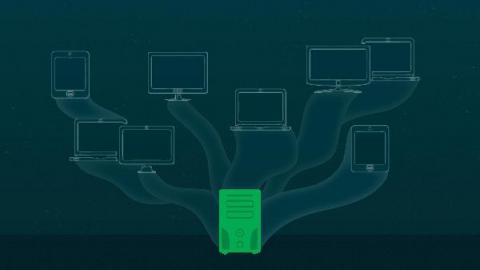
Virtualization has been with us since the 1960s. In computer science terms, it is about as old as the hills. Yet this old-school idea has never been more relevant. We all know hardware is expensive. Despite the cost, many businesses squander their precious processing power. All too often, a “one server, one purpose” mindset leads IT departments to waste server capacity. With virtualization, we leave this myopic view of server management in the dust.
Most interactions with a web application occur at the browser. Users search items, fill forms, create shopping carts, log into their profiles, and perform many other tasks. Unit tests are great, but nothing beats testing an application by interacting with the user-facing frontend. In this tutorial, you will learn and demonstrate how to write tests for the browser using Puppeteer . You will then take this a step further by automating the testing process in a continuous integration flow.
Django is the most popular web development framework for the Python programming language. Its design facilitates rapid development without compromising on the standards of professionally built applications. It is free, open source, uses the Model-View-Template architectural pattern, and encapsulates a lot of boilerplates to enable developers churn out web apps quickly.