







San Francisco, CA, USA
2016
  |  By Dan Juengst
AI model drift is when an AI system's performance and accuracy degrades over time because the data, user behavior, or business environment has changed since the model was trained or evaluated. Even if latency, uptime, and infrastructure metrics remain healthy, model quality can quietly decline, leading to less accurate predictions, inconsistent responses, and reduced user trust.
  |  By Kale Bogdanovs
BubbleUp has always been the fastest way to figure out what a group of outliers have in common. Draw a box around a band of slow traces, a cluster of errors, or any set of events you're interested in, and BubbleUp compares that selection to the baseline across every dimension you've sent us. It's how Honeycomb users find the "unknown unknowns" that dashboards can’t show you.
  |  By Rox Williams
Last week, we sat down with the authors of Observability Engineering for a live AMA. We ended up getting so many questions (pre-submitted and live) that we couldn't get through them all. Charity, Liz, George, and Austin kindly stuck around afterward to answer more, ranging from low-hanging observability fruits and telemetry to AI and what software engineers can do that Claude can't. Missed the live session? Watch it on demand now.
  |  By Douglas Soo
A few months ago, I noticed something happening. I would spend all day working with LLMs—prompting them, reviewing their work, and correcting them—and when I wasn’t working on my own code, I was reviewing LLM-generated code. By the end of the day, I was exhausted. This was a very unusual thing for me: I’ve been a software developer at startups for 30 years, and while sometimes I might have gotten stressed out, I had never been exhausted by the actual act of writing code.
  |  By Shabih Syed
For the third consecutive year, Honeycomb has been recognized for its Ability to Execute and Completeness of Vision, and we believe for its strong vision around fast, flexible, high-cardinality querying that helps engineers understand not just that something broke, but why. The software development lifecycle has collapsed. The neat sequence of plan, build, test, and ship that teams have relied on for 20 years is now happening in a single afternoon. AI writes a large share of the code.
  |  By Fred Hebert
Roughly a year ago, I left Honeycomb’s SRE team to join the newly formed Tenant team, which works on our Private Cloud offering. This team held some significant challenges on its roadmap if it wanted to demonstrate that the offering was possible, would be worth the cost, and could be done without representing a heavy tax on the rest of the organization.
  |  By Austin Parker
A year ago, I wrote “It’s the End of Observability (and I Feel Fine).” The upshot of that post was that AI was about to fundamentally change the way we approach systems design and operation in the future. In the grand tradition, I’d like to revisit my claims from then and see how my predictions panned out.
  |  By Liz Fong-Jones
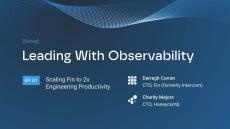
In this two-part blog series, I give a detailed report-out on how our Honeycomb engineering team 2.5x-ed our throughput using AI without breaking everything or lowering our standards for quality. Part 1 explains how we did it and shows data about how that ramp-up happened. Part 2 shares what we learned.
  |  By Liz Fong-Jones
In this two-part blog series, I give a detailed report-out on how our Honeycomb engineering team 2.5x-ed our throughput using AI without breaking everything or lowering our standards for quality. Part 1 explains how we did it and shows data about how that ramp-up happened. In this blog, I share what we learned. The “platform engineering” frame and the “autonomy, ownership, feedback loops” frame are the same frame, spoken in two different vocabularies.
  |  By Josh Parsons
We recently wrapped up a large-scale, multi-month Kafka migration project. We used to run self-hosted Confluent Platform and ZooKeeper as clusters of AWS EC2 instances, and now all of our Kafka clusters run open-source Apache Kafka 4.1.1 running in KRaft mode and deployed to AWS EKS.
  |  By Honeycomb
Stripe shares lessons from building an incident investigation agent, from context-window blowups to why the final 5% still needs a human. In this O11yCon 2026 talk, they dig into what it takes to go from 'it works' to 'it works reliably,' including how pointing agents at like Honeycomb's speeds up on-call investigations.
  |  By Honeycomb
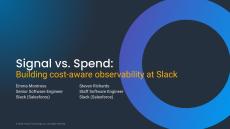
It started with a single log line taking up a massive amount of volume: 500 million emissions per hour. Pulling that thread led Emma and Steven into Slack's broader logging pipeline: 311 billion logs per day at 4.4M/sec peak, with no volume limits, no per-service attribution, and no feedback to the teams generating the noise.
  |  By Honeycomb
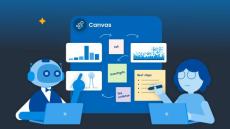
In this session at O11yCon, Purvi Kanal, Jamie Danielson, and Martin Holman demoed the new Canvas. Canvas now understands OpenTelemetry GenAI semantic conventions, and can show agent invocations, LLM calls, and tool calls all in one trace view. Humans and agents can work in the same place, with skills that let each team encode their own expertise so both the agent and their colleagues can use it. Multiplayer support means you can see your teammates' cursors and share charts.
  |  By Honeycomb
At Slack, between 100 to 200 users per day use Honeycomb for client observability, tracing, instrumentation, analysis of performance, frontend issues, investigating incidents, or just looking into production issues.
  |  By Honeycomb
Watch Nathen Harvey's full talk at O11yCon 2026, Honeycomb's observability conference, and enjoy Christine Yen's intro as well.
  |  By Honeycomb
In this demo, Liz and Kale talk through a slow query that Liz couldn't get out of her head. During a conference, she set out to solve it... and ended up finding two more bugs to fix with, Honeycomb MCP, and Honeycomb Canvas.
  |  By Honeycomb
In her talk at O11yCon 2026, Nishi Bhonsle of Salesforce talked about,, and provided some great examples of how Honeycomb has helped Salesforce issues in seconds. Here's a 4-minute highlight reel.
  |  By Honeycomb
Honeycomb and Embrace are extending the rigorous, data-driven practice that Honeycomb pioneered for foundational to mobile and web, giving, site reliability, and platform teams a complete, correlated picture of system health. The strategic partnership makes understanding performance and reliability for every user and every screen part of the observability practice, bringing new depth and standardization to how teams measure end user impact.
  |  By Honeycomb
Watch a full replay of all sessions on Day 3 of Honeycomb's Innovation Week.
  |  By Honeycomb
Honeycomb has shipped a production integration with Amazon Bedrock AgentCore, surfacing agent telemetry directly in Agent Timeline, Honeycomb's trace view for behavior. It's available now and built on.
  |  By Honeycomb
Honeycomb is an event-based observability tool, but you can-and should-use metrics alongside your events. Fortunately, Honeycomb can analyze both types of data at the same time. When maturing from metrics-based application monitoring to an observability-based development practice, there are considerations that can make the transformation easier for you and your team.
  |  By Honeycomb
Evaluating observability tools can be a daunting task when you're unfamiliar with key considerations and possibilities. This guide steps through various capabilities for observability tooling and why they matter.
  |  By Honeycomb
This document discusses the history, concept, goals, and approaches to achieving observability in today's software industry, with an eye to the future benefits and potential evolution of the software development practice as a whole.

Honeycomb is a tool for introspecting and interrogating your production systems. We can gather data from any source—from your clients (mobile, IoT, browsers), vendored software, or your own code. Single-node debugging tools miss crucial details in a world where infrastructure is dynamic and ephemeral. Honeycomb is a new type of tool, designed and evolved to meet the real needs of platforms, microservices, serverless apps, and complex systems.

Honeycomb provides full stack observability—designed for high cardinality data and collaborative problem solving, enabling engineers to deeply understand and debug production software together. Founded on the experience of debugging problems at the scale of millions of apps serving tens of millions of users, we empower every engineer to instrument and query the behavior of their system.