


|
By Mezmo
Making an SRE agent available in Slack sounds straightforward until you start thinking about what that agent can access. If it's connected to Kubernetes, you need to consider how Slack communicates with the agent, what infrastructure the agent can inspect, and who can ask it to do something. Making operational tools easier to use shouldn't mean exposing another service or giving everyone unrestricted access to production.

|
By Mezmo
If you're using agents and MCPs to get a better understanding of your environment or work through an investigation, you can get a lot of useful information back. You can pull logs, look at recent changes, and check how services are configured, but you're still the one deciding what to do with all of it. That part of the process still lives in your head. To see where Jev might fit, look at decisions your team already makes and work backwards from them.

|
By Mezmo
Authored by Greg Janco, Engineering Manager at Mezmo I've always thought there was something backwards about incident response. An alert fires at 3 a.m. PagerDuty does its job. Somebody wakes up, grabs a laptop, connects to the VPN, opens the alert, and then starts answering the same basic questions we ask at the beginning of almost every incident. What changed? What else is broken? Have we seen this before? Some of those need a human eventually. A lot of the first pass doesn't.

|
By Mezmo
Authored by Sven Delmas, VP of Research at Mezmo I wanted to know what Mezmo's new trace features feel like with real telemetry behind them, so I built the smallest honest rig I could: the OpenTelemetry demo application running in a local Kubernetes-in-Docker cluster on my machine, one collector, and one deliberately simple Mezmo pipeline.

|
By Mezmo
Builder in the loop is a Mezmo interview series with the engineers, product leaders, and operators shaping AURA. Each installment looks past the product layer to explore the decisions, tradeoffs, and lessons involved in building agents for real production work. This installment features Mike Shearer, the engineer who built AURA and, until recently, its only developer. AI agents are easy to believe in when the task is small.

|
By Mezmo
Most of the AI features that shipped into observability tools this year summarize alerts. You get a paragraph that restates the dashboard you were already looking at, and the agent never reads the cluster itself, because giving it cluster access is a security conversation nobody wanted to start. This walkthrough starts it.
|
By Mezmo
Software systems are getting better at understanding themselves. The mix of richer telemetry, smarter pipelines, and agentic AI is shifting observability from a passive record of events into something more active and useful. That shift is what we mean by context engineering. We recently partnered with O’Reilly on a report by David Beale that introduces the discipline. Before you read it, here are five things worth knowing.

|
By Mezmo
AI has changed how software gets built. It hasn't changed how software gets run. Most of the AI money in software has gone into the IDE: code generation, copilots, developer assistants, faster pull requests. That work matters. But writing software is one slice of the lifecycle. The harder problem, and the more expensive one, is running that software in production. Production is where systems fail in ways nobody predicted. Incidents don't stay inside one service.

|
By Mezmo
PagerDuty fires. You open the incident. Title, timestamp, nothing else. Whatever context exists is in someone's head, in a Slack thread from two weeks ago, or in a runbook nobody has touched since the last reorg. We got tired of that. So we put an AURA agent behind a Slack bot and pointed it at our own production environment.

|
By Mezmo
By: Tucker Callaway, CEO at Mezmo The market keeps saying “SaaS is dead.” That’s probably true, but it’s also incomplete. What’s actually dying is the idea that value lives inside a vendor-controlled black box. The next era is about utilities: unlimited coding capacity and unlimited analytical capability. And if those two utilities are real, then the vendor model has to change.

|
By Mezmo
Running an agent in your cluster should not mean opening it to the internet. AURA reaches Slack over an outbound socket, so the cluster stays locked down. Jeff Vogt connects an AURA deployment running in Kubernetes to Slack using AURA's direct Slack integration. The setup is a Slack app with an app token and a bot token, plus a few lines added to the deployment's configuration. The Kubernetes MCP server is already deployed and connected to AURA before the video starts.

|
By Mezmo
The bucket is right there and the function still cannot read it. AURA reads the failure, names the one missing action, and returns the policy to add. A permissions failure gives you the symptom and not the action name. The usual path is reading the error, guessing which actions the execution role is short, and widening the policy until the call goes through. Greg hands AURA a Lambda function that fails when it tries to reach an S3 bucket. AURA identifies the missing ListBucket permission on that particular bucket and returns the minimum policy needed to allow it.

|
By Mezmo
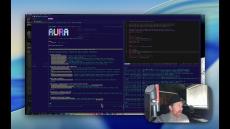
AURA runs as a standalone service and knows nothing about Slack. A separate bridge streams events off its API, which is what makes the chat tool swappable. This is the implementation behind the automated PagerDuty investigation demo. Jeff Vogt walks the whole path an incident takes: a Grafana alert fires PagerDuty, PagerDuty opens a Slack channel and sends a webhook, and a service called AURA Bridge picks it up and calls AURA's API with an investigation prompt.
|
By Mezmo
Two engineers can hold the same approve button and still not be allowed to make the same change. The key riding with the approval settles it. AURA's human in the loop config gates the create_pipeline tool on the Mezmo MCP server and sends each request to a webhook for review. A mock UI stands in for the approval system here, and Mike walks through the payload schema so you can point it at your own.

|
By Mezmo
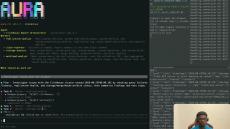
Nobody wants an API key sitting in an agent's config file on a shared server. Mike shows how AURA takes the credential off the request instead. AURA can hold your keys in its config file, but it does not have to. Mike Shearer, one of AURA's creators, walks through the alternative: AURA reads named headers off the incoming request and forwards them to the MCP servers it calls, so the credential never has to sit on disk.
|
By Mezmo
Ingestion stops, and you start reading system tables by hand to find out why. This run checks disk, merges, and replication across every replica first.
|
By Mezmo
3 a.m., the pager fires, and the runbook describes a service that shipped three versions ago. Ask the agent what the cluster actually has instead. Runbooks go stale because clusters change faster than documentation does. Every deploy, every new service, every renamed alert widens the gap between what is running and what is written down.
|
By Mezmo
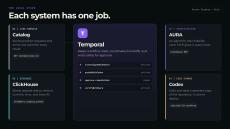
1,133 requests failed on one bad commit. The patch and the regression test are already written by the time anyone is asked to read the exact diff. This demo runs AURA as one step inside a Temporal workflow, alongside Codex. A GET request against a product catalog service goes from success to HTTP 500, and ClickHouse records the version, commit, trace ID, and exact error for every request. By the time AURA investigates, all 1,133 requests on that version have failed.

|
By Mezmo
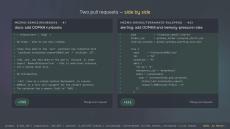
Checkout starts failing because the cart service keeps dying. The real cause is a recent pull request that let memory grow with every add to cart.

|
By Mezmo
The same agent that reads a Kubernetes cluster reads a Windows machine. One MCP server, one config entry, and the questions are the ones you already ask.

|
By Mezmo
Logging in the age of DevOps has become harder and more critical than ever because it is key to maintaining visibility and security in today's fast-moving, highly dynamic environments. With these needs and challenges in mind, Mezmo has prepared this eBook to offer guidance on how best to approach the log management challenges that teams face today.
|
By Mezmo
A growing number of log management solutions available on the market today are offered as cloud-only services. Although cloud logging has its benefits, many organizations have requirements that can only be fulfilled with self-hosted/on-premises log management systems.
|
By Mezmo
Here's a complete guide covering all core components to help you choose the best log management system for your organization. From scalability, deployment, compliance, and cost, to on-prem or cloud logging, we identify the key questions to ask as you evaluate log management and analysis providers.
|
By Mezmo
Despite having an extensive feature set and being open source, organizations are beginning to realize that a free ELK license is not free after all. Rather, it comes with many hidden costs due to hardware requirements and time constraints that easily add to the total cost of ownership (TCO). Here, we uncover the true cost of running the Elastic Stack on your own vs using a hosted log management service.
- October 2026 (3)
- September 2026 (1)
- August 2026 (31)
- July 2026 (6)
- June 2026 (1)
- May 2026 (6)
- April 2026 (5)
- March 2026 (2)
- February 2026 (1)
- January 2026 (4)
- December 2025 (1)
- November 2025 (3)
- October 2025 (1)
- September 2025 (4)
- August 2025 (5)
- July 2025 (7)
- June 2025 (5)
- May 2025 (3)
- April 2025 (5)
- March 2025 (1)
- February 2025 (2)
- January 2025 (1)
- December 2024 (4)
- November 2024 (6)
- October 2024 (3)
- September 2024 (5)
- August 2024 (4)
- July 2024 (4)
- June 2024 (5)
- May 2024 (4)
- April 2024 (6)
- March 2024 (1)
- February 2024 (2)
- January 2024 (2)
- December 2023 (5)
- November 2023 (2)
- October 2023 (5)
- September 2023 (1)
- July 2023 (1)
- June 2023 (4)
- May 2023 (1)
- April 2023 (8)
- March 2023 (2)
- February 2023 (6)
- January 2023 (4)
- December 2022 (3)
- November 2022 (4)
- October 2022 (3)
- September 2022 (1)
- August 2022 (2)
- July 2022 (2)
- June 2022 (3)
- May 2022 (1)
- April 2022 (3)
- March 2022 (2)
- February 2022 (2)
- January 2022 (3)
- December 2021 (7)
- November 2021 (4)
- October 2021 (11)
- September 2021 (4)
- August 2021 (5)
- July 2021 (6)
- June 2021 (7)
- May 2021 (9)
- April 2021 (3)
- March 2021 (6)
- January 2021 (1)
- November 2020 (2)
- October 2020 (2)
- September 2020 (3)
- August 2020 (5)
- July 2020 (9)
- June 2020 (8)
- May 2020 (3)
- April 2020 (2)
- March 2020 (1)
- February 2020 (1)
- January 2020 (4)
- November 2019 (3)
- October 2019 (4)
- September 2019 (1)
- August 2019 (2)
- July 2019 (7)
- June 2019 (5)
- May 2019 (7)
- April 2019 (9)
- March 2019 (4)
- February 2019 (8)
- January 2019 (9)
- December 2018 (8)
- November 2018 (12)
- October 2018 (4)
- September 2018 (1)
- July 2018 (3)
- May 2018 (2)
- April 2018 (3)
- July 2017 (1)
Log Management Modernized. Instantly collect, centralize, and analyze logs in real-time from any platform, at any volume.
Why Mezmo?
- Powerful Logging at Scale: Get powerful log aggregation, auto-parsing, log monitoring, blazing fast search, custom alerts, graphs, visualization, and a real-time log analyzer in one suite of tools. We handle hundreds of thousands of log events per second, and 20+ terabytes per customer, per day and boast the fastest live tail in the industry. Whether you run 1 or 100,000 containers, we scale with you.
- Easy, Instant Setup: Mezmo's SaaS log management platform sets up in under two minutes. Instantly collect logs from AWS, Docker, Heroku, Elastic, and more with the flexibility to deploy anywhere - cloud, multi-cloud, or self-hosted. Logging in Kubernetes? Logs start flowing in just 2 kubectl commands. Whether you wish to send logs via Syslog, Code library, or agent, we have hundreds of custom integrations.
- Affordable: Mezmo’s simple, pay-per-GB pricing model eliminates contracts, paywalls, and fixed data buckets. Try our free plan, or only pay for the data you use with no overage charges or data limits. Our user-friendly, frustration-free interface allows your team to get started with no special training required, saving even more time and money.
- Secure & Compliant: Our military grade encryption ensures your logs are fully secure in transit and storage. We offer SOC2, PCI, and HIPAA-compliant logging. To comply with GDPR for our EU/Swiss customers, we are Privacy Shield certified. The privacy and security of your log data is always our top priority, and we are ready to sign Business Associate Agreements.
Blazing fast, centralized log management that's intuitive, affordable, and scalable.