










Mountain View, CA, USA
2012
  |  By Sam Osborn
Picture the bridge call at 2 am. A Sev1 has taken down a critical service, and the paging storm has pulled forty people out of bed, even though only six of them will ever touch the fix. The first hour disappears into roll call and trying to figure out which changes shipped last night, which alerts are related, and who actually owns the failing service.
  |  By Rob Pickering
For enterprise IT leaders, the question is no longer whether AI agents can help run IT operations, but how to scale them beyond pilots and into the everyday work of keeping the business online. It’s no coincidence that this year’s Gartner IT Infrastructure, Operations & Cloud Strategies Conference (IOCS) opens with a keynote dedicated to scaling agentic AI to enable autonomous IT operations. At BigPanda, we’ve seen a shift from the ITOps leaders we work with every day.
  |  By Sam Osborn
The debate is no longer whether AI belongs in ITOps; it’s about how quickly it can be implemented, how to measure it, and who’s accountable when it acts. And although IT leaders across industries are scrambling to integrate agentic AI into their operations, those deployments are facing serious challenges. A new Harris Poll survey of more than 300 U.S. data and AI decision-makers puts a number on the problem.
  |  By Rob Pickering
On August 17, Gartner placed BigPanda in the Niche Players quadrant of the 2026 Gartner Magic Quadrant for AI Applications in IT Service Management (ITSM). It’s our first time on this MQ, after an honorable mention last year. I’m glad we’re there, and I want to explain why a company that doesn’t sell an ITSM platform reads that as a strong result.
  |  By Rob Pickering
It’s 2:14 am, and checkout latency at your largest retail store has tripled. Your observability platform’s agent has already posted to Slack that there is a connection pool exhaustion on the orders database, with a link to the trace. Your cloud provider’s agent reports a degraded network path in one availability zone. The AI SRE tool one of your product teams adopted last spring points to a deploy that went out at 1:50.
  |  By Sam Osborn
Downtime is expensive, and it’s getting harder to avoid. Every year, enterprise IT environments grow more distributed, dynamic, and difficult to maintain with legacy tools and manual processes. With unplanned outages costing enterprises nearly $25,000 per minute, establishing and maintaining a resilient IT infrastructure is essential. Enterprises have already invested heavily in resilient architecture.
  |  By Assaf Resnick
A major incident can turn a highly skilled engineer into a coordinator, a search engine, and a status writer. The work looks necessary in the moment. The cumulative effect is easy to miss: the people most needed to understand the failure spend their time repeating what others already know.
  |  By Assaf Resnick
Enterprise software can now change faster than most operating models can interpret what changed. That creates a question many AI plans leave unanswered: when development accelerates, where does the operational bottleneck go?
  |  By Katie Petrillo
Most teams we talk to are fighting the same battle. The knowledge needed to make a decision already exists somewhere. However, it’s locked in a tool your team isn’t looking at, or in the head of the one engineer who’s seen this same type of incident before. This month’s updates all chip away at that same problem. Here’s what’s new.
  |  By Assaf Resnick
The modern enterprise runs on a technology stack that changes faster than the operating model responsible for keeping it available. Applications that once moved through scheduled releases now change continuously. Infrastructure is distributed and dynamic. Services depend on other services, teams depend on other teams, and operational data arrives from more places than any individual can reasonably inspect. The business asked for agility, flexibility, and velocity, and the tech delivered.
  |  By BigPanda
Is your IT operations model keeping up with growing complexity? From rising incident volumes to costly outsourcing and unnecessary escalations, here are 4 signs it may be time to rethink how your IT operations run. Discover why enterprises are turning to AI agents to reduce manual work and scale operations.
  |  By BigPanda
Welcome back to This Week in ITOps, our weekly roundup of the news shaping the ITOps industry. This week, we saw several stories highlight the reality that as AI agents move into production operations, governance, observability, and cost control are becoming just as important as automation.
  |  By BigPanda
What happens when even 600 people aren't enough to keep up with incident volume? In this clip from BigPanda's Project Zero conversation, Tal explains why adding more L1 headcount doesn't necessarily mean faster incident resolution. The challenge isn't just capacity. It's the manual operating model. Watch the full Project Zero conversation on our channel.
  |  By BigPanda
Agentic IT operations (Agentic ITOps) deploy autonomous AI agents that can perceive, reason, plan, and act to investigate incidents, coordinate people, and improve with every incident they touch. Think of it as the next step in a progression, where monitoring surfaced the symptoms, AIOps separated signal from noise, and Agentic ITOps takes action on what it finds.
  |  By BigPanda
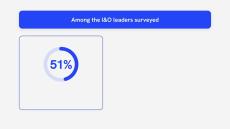
A Gartner survey of 782 I&O leaders found that only 28% of AI use cases in infrastructure and operations fully succeed and meet ROI expectations, while 20% fail outright. Among the 57% of I&O leaders who reported at least one failure, many said their AI initiatives failed because they expected too much, too fast.
  |  By BigPanda
AI can make decisions. But can it make the right ones across your entire IT environment? For enterprise SRE teams, trustworthy AI requires three things: operational context, institutional memory, and guardrails. Without them, autonomous action becomes a risk instead of an advantage. In our latest webinar, we explore what it takes to bring AI SRE capabilities to enterprise scale.
  |  By BigPanda
IT environments keep getting noisier and more distributed. The teams managing them aren’t growing at the same pace. That gap won’t close on its own.
  |  By BigPanda
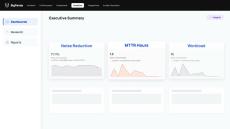
See how BigPanda Analytics turns IT operations analytics into instant answers, no hand-built reports required. IT leaders are used to waiting on a report someone on the ops team had to hand build, and every follow-up question starts the cycle over again, while the business keeps moving. This demo shows how IT executives get direct access to IT operations analytics: prebuilt dashboards, AI-powered insights, and a natural language research tool that answers questions in real time.
  |  By BigPanda
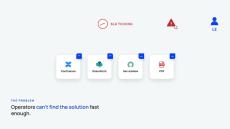
Swarm investigation puts an entire team of AI agents on a major incident at once, cutting root cause discovery from hours to minutes. Every minute of a major incident costs real money, and traditional investigation, whether it's one engineer chasing a hypothesis or a team coordinating across tools, can't keep pace. This video shows how BigPanda's Swarm investigation dispatches AI agents to query systems, compare signals, and validate root cause in real time. See how autonomous incident response turns hours of manual troubleshooting into minutes.
  |  By BigPanda
The fix for your next incident is probably already written in a runbook. See how BigPanda finds the right runbook for every incident, automatically.
  |  By BigPanda
Autonomous operations based on AI lets IT operations teams quickly identify the root cause of incidents in today's hybrid computing environments. Learn how to evaluate AIOps solutions and pick the one that best meets the needs of your organization.
  |  By BigPanda
Stretched thin and relying on legacy IT Ops tools, IT Ops, NOC and DevOps teams are unable to effectively support today's highly complex, dynamic IT stack. This is causing a rising tide of outages, poor app performance and service disruptions. What's the answer? AI and ML-driven IT Ops automation.
  |  By BigPanda
Grounded in the latest market research, this new report, The Modern NOC: IT Ops Predictions for 2018, features 9 key predictions for our industry. Whether you are an executive, manager or engineer, this report examines issues and trends that affect the enterprise at all levels.

BigPanda Autonomous Operations platform helps IT Ops, NOC and DevOps teams detect, investigate, and resolve IT incidents faster and more easily than ever before.

Powered by Open Box Machine Learning, BigPanda correlates IT noise into insights, automates incident management, and unifies fragmented IT operations. Customers such as Intel, TiVO, Turner Broadcasting and Workday rely on BigPanda to reduce their operating costs, improve service availability and performance, and de-risk and accelerate their digital transformation initiatives. Founded in 2012, BigPanda is backed by top-tier investors including Sequoia Capital, Mayfield, and Battery Ventures.

The intelligent automation your IT Ops team always wanted:

  • Correlate: BigPanda's Autonomous Operations platform intelligently correlates alerts from all your monitoring, topology, change and other tools into a handful of context-rich incidents. This lets your ops teams quickly and easily focus on what matters the most to your customers and your business.
  • Automate: BigPanda's Autonomous Operations platform intelligently automates responses to your IT incidents across their lifecycle. This lets your ops teams handle more incidents faster and more effectively than ever before.
  • Streamline: BigPanda's Autonomous Operations platform intelligently streamlines workflows across your Level 1, 2 and 3 team members, and across your ticketing, service desk and collaboration tools. This lets your ops team rapidly resolve incidents, before they affect your customers and your business.

Autonomous Digital Operations. Intelligent Automation for IT Incident Management.