


|
By Jacob Schmitt
Git worktrees let you check out multiple branches of the same repository in separate directories. Each worktree has its own files and staging area, but they all share the same Git history. You can work on several branches without repeatedly switching between them, stashing changes, or cloning the repository again. Worktrees are especially useful when working with coding agents. Tools like Claude Code, Codex, and Cursor can use them to handle multiple tasks in parallel without editing the same files.

|
By Roger Winter
A one-line fix shouldn’t wait on the whole test suite. Yet a typical CI pipeline runs every test on every push, and a single flaky failure sends developers back to the rerun button. CircleCI’s Smarter Testing addresses both problems. Test impact analysis tracks which source files each test executes, then runs only the tests affected by a code change. Auto rerun retries flaky tests inside the job instead of failing the build.

|
By Roger Winter
The CircleCI CLI brings CI into your terminal, where developers and coding agents can work with it directly. You can set up projects, trigger and monitor pipelines, investigate failures, retrieve test results and artifacts, manage project settings, and more. Agents can use the CLI through shell commands or its built-in MCP server, giving them the tools and context to validate changes, diagnose failures, and try again without switching to a browser.

|
By Jacob Schmitt
Software teams are taking on more work than ever. Developers are juggling more branches, coding agents are keeping CI busy through the weekend, and builds are passing more often and finishing faster. But is all that extra activity helping teams ship faster? Today we released the 2026 State of Software Delivery Q3 Pulse report, the latest in our quarterly series tracking how software teams are adapting to AI-driven development.

|
By Jacob Schmitt
Large pull requests can be a pain to review. When a change touches dozens of files and adds hundreds of lines of code, reviewers have a lot to work through before they can approve it. And if something needs to change, the whole PR goes through another round of review. Stacked PRs let developers split a large change into smaller, dependent pull requests that can be reviewed separately.

|
By Jacob Schmitt
Intent-driven development (IDD) is an approach to AI-assisted software development where teams make the desired behavior, constraints, and criteria for success explicit, then give an agent freedom to determine how to achieve the result. As agents take on larger and more autonomous development and maintenance tasks, the implementation itself becomes easier to replace. The important question is whether the software still behaves the way the team intended.

|
By Jacob Schmitt
Improving agent experience (AX) is one thing. Keeping it good as your product changes is harder. A renamed field, different error response, or overlapping tool can turn a workflow that worked yesterday into extra retries, wasted tokens, or human intervention. CI gives teams a way to catch AX regressions as part of the development process. You can test the interfaces agents depend on, run representative agent workflows against product changes, and preserve fixed failures as regression cases.

|
By Jacob Schmitt
A software factory is a system for turning engineering intent into production software through repeatable, increasingly automated workflows. It connects the tools, infrastructure, people, agents, validation, and delivery controls required to move work from an idea or issue into production. Coding agents have made the model newly relevant. Teams can now produce software changes much faster than traditional development processes were designed to evaluate and coordinate.

|
By Roger Winter
Language servers give editors structured, real-time feedback: diagnostics, hover docs, autocomplete, and other guidance that would otherwise surface later. Language servers already exist for many of the languages and tools developers use every day, but Claude Code doesn’t automatically receive their feedback.
|
By Nathan Fish
Testing consumes up to 50% of CI/CD pipeline time. That’s the single most expensive place in your delivery pipeline, and a meaningful share of that time is often wasted running tests unaffected by the change. Every time a developer pushes a commit, the full test suite runs. A two-line bug fix in auth.py triggers 2,000 tests, including 1,900 that don’t touch anything near auth.py. Those unrelated tests are overwhelmingly likely to pass, but the pipeline still spends 20 minutes running them.

|
By CircleCI
Engineering teams are taking on more work, but delivery velocity isn't keeping up. Here's what we're seeing in our Q3 State of Software Delivery Pulse Report.

|
By CircleCI
Chunk Sidecars + Smarter Testing help your agent catch issues and run relevant tests before pushing code.

|
By CircleCI
Rob Zuber on why getting hands-on can give every team a better understanding of developers and the problems they’re solving.

|
By CircleCI
CircleCI Smarter Testing is now generally available. In this tutorial, we’ll show you how Smarter Testing helps you run fewer tests, get faster feedback, and reduce unnecessary CI compute with three capabilities: Then, we’ll put it to the test. For the same code change, a traditional pipeline ran all 9,716 tests across 15 nodes. With Smarter Testing, CircleCI identified just 44 impacted tests and skipped the other 9,672, cutting test runtime from 3 minutes and 56 seconds to 22 seconds.

|
By CircleCI
One file changed. 9,716 tests in the suite. Only 44 needed to run. See how Smarter Testing uses Test Impact Analysis to cut the unnecessary tests and get to feedback faster.

|
By CircleCI
The old model: build the product, then build the machine to sell it. Now? The tools might change in 48 hours. Time to learn them all over again.

|
By CircleCI
Turns out telling coding agents what to do over and over again doesn't actually make them better at fixing CI failures.

|
By CircleCI
When the industry moves this fast, the only way to figure it out might be by doing it yourself.
|
By CircleCI
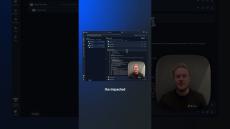
One file changed. 9,716 tests in the suite. Only 44 needed to run. See how Smarter Testing uses Test Impact Analysis to cut the unnecessary tests and get to feedback faster.

|
By CircleCI
Stop manually pushing branches, hunting for logs, and pasting errors back into your editor. This video shows you how to connect Cursor to CircleCI using the CircleCI CLI so your AI agent can trigger pipelines, read build output, and fix failures autonomously without you ever leaving the IDE. In this demo, we introduce a bug, let CI catch it, and watch the agent diagnose and fix it on its own, monitoring the pipeline until it comes back green. No tab-switching. No copy-pasting logs.

|
By CircleCI
Many organizations fail to adopt application security best practices that work to protect software, data, and users. But integrating security tools into your application development environment can make security issues more visible and easier to catch while providing real-time insights into threats and vulnerabilities.

|
By CircleCI
There are many reasons teams get stuck in the process of adopting DevOps. Now Rob Zuber, CircleCI CTO, brings an inspiring and practical guide to moving your team further up the DevOps maturity ladder, regardless of where you are now. In this ebook, Rob brings two decades of experience leading teams to work for you, with practical takeaways and strategies that work for real-world teams, from startups to enterprise companies.

|
By CircleCI
But getting your team on board can be a challenge. Shipping great products isn't just about writing good code. If you want confidence in your code, knowing how to properly test it is key. Download this guide today and ship more confidently tomorrow.

|
By CircleCI
Many of the world's highest performing software development teams have adopted DevOps practices, simplifying software builds, testing, and deployment. But standard DevOps process fails to address a vital issue: security and vulnerability management. Learn how to shift security left and get your entire team onboard to maintain the security of their libraries and container images.

|
By CircleCI
There's a lot of excitement and accolades around startups everywhere these days -- success stories and big payoffs. But no one talks about what it really takes to get there: the day-to-day onslaught of small, technical decisions that are expected of a technical leader in a fast-growing company. In this ebook, CircleCI CTO and 20+ year technology veteran Rob Zuber shares the tactics he's used to focus on what's important, make the right decisions at the right times, and to strategize which decisions to make now, later, or never.

|
By CircleCI
The concept of 'testing in production' has started to become an increasingly viable methodology and a tool for teams to use in their validation process - but what does it really mean to test in production? And what does it cost to do it well? In this ebook, CircleCI CTO Rob Zuber will explore these questions and other topics like.
|
By CircleCI
DevOps is a growing trend, but where did it come from? It's the unification of two traditionally disparate worlds into one cohesive cycle. But it's not some recent invention or fad; it's the result of years of iteration, as engineers have cracked risk into progressively smaller chunks. In this whitepaper, we'll discuss.

|
By CircleCI
...but it doesn't end there. Once you've hired the best, keeping them engaged, motivated, and working well with each other is an ongoing challenge. In this ebook, you'll hear from some of our top technical leaders about the techniques and principles we've spent years honing. Growing a technical company requires more than great technical leadership-it requires thoughtful, compassionate, and expert people leadership as well. Download this ebook today, and help your team thrive.

|
By CircleCI
Workflows were created so that teams could run their builds in any way they choose. This ebook contains examples and config files from 8 different open source projects so you can see exactly how real development teams (at companies like Facebook and Google) are using workflows right now to ship applications.
- October 2026 (15)
- September 2026 (11)
- August 2026 (14)
- July 2026 (23)
- June 2026 (18)
- May 2026 (10)
- April 2026 (16)
- March 2026 (26)
- February 2026 (8)
- January 2026 (12)
- December 2025 (7)
- November 2025 (3)
- October 2025 (16)
- September 2025 (11)
- August 2025 (8)
- July 2025 (9)
- June 2025 (10)
- May 2025 (16)
- April 2025 (19)
- March 2025 (16)
- February 2025 (8)
- January 2025 (5)
- October 2024 (4)
- September 2024 (1)
- August 2024 (2)
- July 2024 (6)
- June 2024 (8)
- May 2024 (2)
- April 2024 (5)
- March 2024 (4)
- February 2024 (7)
- January 2024 (7)
- December 2023 (7)
- November 2023 (15)
- October 2023 (9)
- September 2023 (12)
- August 2023 (5)
- July 2023 (12)
- June 2023 (8)
- May 2023 (6)
- April 2023 (6)
- March 2023 (11)
- February 2023 (11)
- January 2023 (4)
- December 2022 (3)
- November 2022 (13)
- October 2022 (15)
- September 2022 (19)
- August 2022 (15)
- July 2022 (20)
- June 2022 (17)
- May 2022 (17)
- April 2022 (23)
- March 2022 (21)
- February 2022 (14)
- January 2022 (25)
- December 2021 (15)
- November 2021 (16)
- October 2021 (21)
- September 2021 (25)
- August 2021 (7)
- July 2021 (16)
- June 2021 (17)
- May 2021 (17)
- April 2021 (21)
- March 2021 (26)
- February 2021 (12)
- January 2021 (3)
CircleCI is the world’s largest shared continuous integration and continuous delivery (CI/CD) platform, and the central hub where code moves from idea to delivery. As one of the most-used DevOps tools that processes more than 1 million builds a day, CircleCI has unique access to data on how engineering teams work, and how their code runs.
Companies like Spotify, Coinbase, Stitch Fix, and BuzzFeed use us to improve engineering team productivity, release better products, and get to market faster.
Everything great teams need:
- Workflows for job orchestration: Define and orchestrate how job execution (such as build, test, deploy) is run, giving you complete control over your development process across multiple supported configurations.
- First-class Docker support: Run any image from Docker’s public/private registry or other common registries, customizable on a per-job basis. Build Docker images, access Docker layer caching, Compose, and more.
- Choose the CPU/RAM you need: Easily configure your compute and memory to fit your team’s specific pipelines. Choose resources that give you optimal performance and increase speed.
- Language-agnostic support: CircleCI supports any language that builds on Linux, Windows, or macOS, including C++, Javascript, .NET, PHP, Python, and Ruby. You are free to use any toolchain, framework, or version you want.
- Powerful caching: Speed up your pipelines with expanded caching options, including images, source code, dependencies, and custom caches. Gain control over cache save and restore points throughout your jobs for optimal performance.
- SSH or run local builds for easy debugging: Quickly find and solve problems using SSH access or run jobs in your local environment to ensure faster remediation of issues. Find and solve bugs where they happen for fast recovery.
- Unmatched security: The controls you need to be confident your code is protected. Host in our cloud or on your own infrastructure, LDAP for user management, full-level virtual machine isolation, and more.
- Insights dashboard: Realize the full value of CircleCI with the Insights dashboard. Track status, monitor duration, and optimize pipelines with ease.
More speed and configurability than ever before with customizable pipelines.