












London, UK
2004
  |  By Ijlal Loutfi
Confidential computing is essential when an organization needs to process sensitive data on infrastructure where the operators should not have access to it.
  |  By Bertrand Boisseau
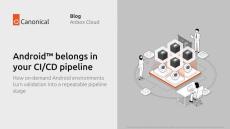
How on-demand Android environments turn validation into a repeatable pipeline stage In the first article, we looked at automation: how Android environments can be created and managed programmatically. In the second, we looked at scaling: how shared infrastructure can make those environments available to more developers, tests, and workloads. This third article looks at the next step: integrating those environments directly into CI/CD.
  |  By Rob Gibbon
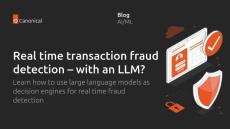
Conversational AI with a chatbot is great for drafting emails or debugging code, but it’s less ideal for real-time application middleware. If you’re trying to inspect a financial transaction for potential fraud in the middle of a checkout loop, you don’t need an LLM to write you an essay about why a credit card transaction looks suspicious – you just need a probability score, and you need it as fast as possible.
  |  By Richard Ferreira
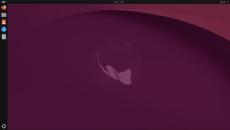
Whether you’re a first-time Linux user, experienced developer, academic researcher, or enterprise administrator, Ubuntu 26.04 LTS Resolute Raccoon is the best way to benefit from the latest advancements in the Linux ecosystem on a stable foundation. As with all LTS releases of Ubuntu, Ubuntu 26.04.1 LTS represents the consolidation of fixes and improvements identified during the initial launch of Ubuntu 26.04 LTS. It’s available to download and install from our download page.
  |  By estelacarmona
Private 5G networks are dedicated cellular systems delivering ultra-reliable low-latency communication, massive IoT connectivity, and customized security for enterprises undergoing digital transformation. Private 5G subsumes advantages of both public and non-public networks, offering unified connectivity, optimized services, and customized security within a defined area.
  |  By Bertrand Boisseau
How shared Android capacity helps engineering teams move beyond fixed device labs In the first blog of this series, we discussed how programmable Android environments can replace manual device preparation with a repeatable lifecycle. A workflow requests an environment with a predefined configuration, executes the required task, collects the results, and releases the resources once the work is completed. Automation enables a team to create a single Android environment reliably.
  |  By Rob Gibbon
So you want your own pet LLM huh? Knowing where to start can be quite tricky, so luckily for you I’ve put together this end-to-end guide. It’ll get you not just started; you’ll end with a fully working chatbot that you’ve fine tuned on the dataset `nampdn-ai/tiny-webtext`, which is a training dataset designed to improve models’ critical thinking abilities. Buckle up, this is going to be both fun and deep.
  |  By Bertrand Boisseau
How on-demand Android environments lay the foundation for Android engineering Software engineering has evolved dramatically over the last decade. Development environments that once depended on dedicated hardware have become resources that can be provisioned, configured, and removed on demand. Infrastructure is now expected to be reproducible, automated, and integrated into continuous development workflows. However, Android has largely remained an exception.
  |  By Carlos Bravo
A decade ago, Canonical launched Ubuntu 16.04 LTS (codenamed “Xenial Xerus”). As a Long-Term Support (LTS) release, it comes with 5 years of standard security coverage, which is doubled to a total of 10 years through Expanded Security Maintenance (ESM) for users with an Ubuntu Pro subscription. As of April 30, 2026, the 10-year ESM coverage for Ubuntu 16.04 LTS, under Ubuntu Pro, has officially reached its end of support.
  |  By Lily Rivers-Klee
For Independent Software Vendors (ISVs), delivering containerized applications to enterprise clients often means navigating a difficult trade-off between minimal image size and accurate security visibility. Traditional approaches can leave development teams battling severe CVE noise or, conversely, missing critical vulnerabilities entirely due to scanner blind spots.
  |  By Canonical Ubuntu
Linux security is built for environments where resilience matters. From vulnerability management to long-term maintenance, securing open source at enterprise scale requires a robust approach across the software lifecycle. Robustness comes from how those practices work together and hold up over time.
  |  By Canonical Ubuntu
AI now powers critical workloads across increasingly complex infrastructure. The question is, how do you keep the data used and generated by AI secure? For many, it’s a question of maximizing control over their own AI stacks, from training data and inference, to infrastructure operations and the underlying software.
  |  By Canonical Ubuntu
Curation plays an important role in enterprise Linux security. Knowing what enters your environment, how it's maintained and what you can rely on over time helps manage open source securely at scale. Understanding these considerations helps inform a deliberate approach to Linux security.
  |  By Canonical Ubuntu
Linux security benefits from transparency. Open source makes code available for scrutiny, allowing vulnerabilities to be identified, understood and addressed. At enterprise scale, that transparency plays an important role in how Linux security is managed.
  |  By Canonical Ubuntu
Linux security is evolving rapidly, with critical implications for enterprise environments. As operational complexity grows, so do the nuances of securing and managing Linux and open source at scale.
  |  By Canonical Ubuntu
Every space mission begins long before launch day. Ideas become spacecraft. Thousands of decisions are made before a single engine ignites. The European Space Agency (ESA) knows what that journey looks like. As the agency prepares to increase the missions it supports by 2030, it is laying the groundwork for decades of future exploration. Working with Canonical, ESA is building a common platform for mission operations based on open source. Kubernetes, Ceph, PostgreSQL, and Kafka form ESA’s infrastructure foundation.
  |  By Canonical Ubuntu
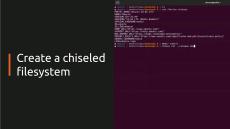
Learn how to create custom chiseled root filesystems (rootfs) using Chisel across different Ubuntu releases and CPU architectures. In this tutorial, we cover three key deployment scenarios: Each scenario is verified inside a sudo chroot environment to confirm application functionality.
  |  By Canonical Ubuntu
Discover Steven’s journey with Ubuntu in this interview at Google Next.
  |  By Canonical Ubuntu
Experimental robots currently assemble minor subparts of themselves, though practical utility remains a distant milestone. What is physical AI? Physical AI embeds machine learning directly into hardware, enabling algorithms to interact, move, and perform autonomous tasks in the physical world.
  |  By Canonical Ubuntu
Learn how to launch Ubuntu Pro versions that aren't available in the AWS EC2 quick launch menu. In this tutorial, Carlos Bravo from Canonical's Cloud team walks you through: Key Resources.
  |  By Canonical
From the smallest startups to the largest enterprises alike, organisations are using Artificial Intelligence and Machine Learning to make the best, fastest, most informed decisions to overcome their biggest business challenges. But with AI/ML complexity spanning infrastructure, operations, resources, modelling and compliance and security, while constantly innovating, many organizations are left unsure how to capture their data and get started on delivering AI technologies and methodologies.
  |  By Canonical
Traditional development methods do not scale into the IoT sphere. Strong inter-dependencies and blurred boundaries among components in the edge device stack result in fragmentation, slow updates, security issues, increased cost, and reduced reliability of platforms. This reality places a major strain on IoT players who need to contend with varying cycles and priorities in the development stack, limiting their flexibility to innovate and introduce changes into their products, both on the hardware and software sides.
  |  By Canonical
Private cloud, public cloud, hybrid cloud, multi-cloud... the variety of locations, platforms and physical substrate you can start a cloud instance on is vast. Yet once you have selected an operating system which best supports your application stack, you should be able to use that operating system as an abstraction layer between different clouds.
  |  By Canonical
Container technology has brought about a step-change in virtualisation technology. Organisations implementing containers see considerable opportunities to improve agility, efficiency, speed, and manageability within their IT environments. Containers promise to improve datacenter efficiency and performance without having to make additional investments in hardware or infrastructure. Traditional hypervisors provide the most common form of virtualisation, and virtual machines running on such hypervisors are pervasive in nearly every datacenter.
  |  By Canonical
Big Software, IoT and Big Data are changing how organisations are architecting, deploying, and managing their infrastructure. Traditional models are being challenged and replaced by software solutions that are deployed across many environments and many servers. However, no matter what infrastructure you have, there are bare metal servers under it, somewhere.

We deliver open source to the world faster, more securely and more cost effectively than any other company.

We develop Ubuntu, the world’s most popular enterprise Linux from cloud to edge, together with a passionate global community of 200,000 contributors. Ubuntu means 'humanity to others'​. We chose it because it embodies the generosity at the heart of open source, the new normal for platforms and innovation.

Together with a community of 200,000, we publish an operating system that runs from the tiny connected devices up to the world's biggest mainframes, the platform that everybody uses on the public cloud, and the workstation experience of the world's most productive developers.

Products:

  • Ubuntu: The new standard secure enterprise Linux for servers, desktops, cloud, developers and things.
  • Landscape: Updates, package management, repositories, security, and regulatory compliance for Ubuntu.
  • MAAS: Dynamic server provisioning and IPAM gives you on-demand bare metal, a physical cloud.
  • LXD: The pure-container hypervisor. Run legacy apps in secure containers for speed and density.
  • Juju: Model-driven cloud-native apps on public and private infrastructure and CAAS.
  • Snapcraft: The app store with secure packages and ultra-reliable updates for multiple Linux distros.

Drive down infrastructure cost, accelerate your applications.