



















Paris, France
2010
  |  By Upsun
Every AI coding tool ships the same promise: your developers, faster. Autocomplete in the IDE, agents in the terminal, a working prototype before lunch. And it delivers, at least for the person holding the keyboard. The problem is that most of what it takes to ship software was never a solo activity, and that is the part the market keeps skipping.
  |  By Upsun
Running workloads across AWS, Azure, and GCP is the operational reality for most enterprise engineering teams. The challenge isn't the providers themselves, it's what happens when each one accumulates its own delivery pipeline, its own security configuration, and its own environment management tooling. What starts as provider flexibility quietly becomes provider-specific complexity, multiplied across every team that ships.
  |  By Upsun
Business continuity planning has a quiet assumption built into most of it: that the infrastructure the plan runs on will cooperate. Backup systems will be accessible. Recovery procedures will work as documented. The provider whose services underpin the critical path will be available, or at least recoverable within the window the plan specifies. That assumption is tested every time a major provider has an outage, a regional failure, or a service disruption that cascades across dependent workloads.
  |  By Upsun
For the past two years, the conversation around AI in software engineering has focused on one thing: productivity. Engineers are shipping faster, writing more code, and completing work in hours that once took days. Every new model promises another leap forward. What gets far less attention is what all that speed demands from the people using it. Guillaume Moigneu, Field CTO at Upsun, has spent the past year watching engineering teams adapt to AI-assisted development.
  |  By Upsun
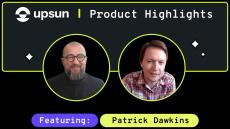
If your team has adopted AI coding agents, you've probably noticed something strange: writing code stopped being the hard part. That's the shift Patrick, a principal engineer at Upsun, kept returning to in our latest Product Highlights conversation. He's spent twelve years here, most of them writing back-end APIs in Go, and the past year building with AI on our newest product, Upsun Dispatch. His verdict on where the bottleneck moved is blunt: "The code isn't really a problem anymore.
  |  By Upsun
There's a version of cloud strategy that looks like a decision and a version that looks like drift. Most enterprises are living the second version. AWS won an early workload because the team knew it. Azure followed the Microsoft enterprise agreement. GCP came in through a data science team that preferred its ML tooling. Nobody chose concentration; it just accumulated.
  |  By Upsun
Ask any engineering leader how AI has changed their team, and you'll get an optimistic answer. Ask them to prove it with a number, and most go quiet. That gap is the story of 2026. Individual engineers are faster than they've ever been. Teams, in a lot of cases, aren't. We talked to our own engineering team, the people who've spent the last year building and shipping Upsun Dispatch and living through exactly this shift, and the same tension came up again and again.
  |  By Upsun
When platform providers talk about autoscaling, they usually mean one thing: application autoscaling, adding or removing web instances based on traffic. The pattern is well understood. Define a metric, set a threshold, and let the platform act on it. Most platforms still leave database capacity as a separate, mostly manual problem. Teams either pre-provision for the worst hour of the worst day, upgrade plans on a calendar, or wire together their own scaling logic on Kubernetes or RDS.
  |  By Upsun
Hosting an MCP (Model Context Protocol) server on Upsun lets AI IDEs like Cursor, Codex, Claude Code and Windsurf reach real infrastructure context (database schemas, service logs, environment variables), closing the gap between local coding assistants and your cloud environment.
  |  By Upsun
For most IT leaders, multicloud didn't arrive as a decision. It arrived as a fait accompli. A team chose AWS for one workload. Azure came in through a Microsoft enterprise agreement. A SaaS acquisition brought its own cloud dependencies. A DR requirement pointed to a second region with a different provider. Nobody declared a multicloud strategy; the organization just became one. Today, 87% of organizations run a multicloud strategy, balancing an average of 2.6 public cloud providers simultaneously.
  |  By Upsun
AI tools made individual developers faster. Teams still aren't shipping more product. That gap is the whole reason Upsun Dispatch exists. In this Product Highlights conversation, Kateryna Dvornichenko, a product manager at Upsun who has spent the past several months building Upsun Dispatch, explains why the tooling market got the unit wrong. Her take: "Making software is a team sport." We get into.
  |  By Upsun
AI helped your engineers ship more code. It didn't help your team ship more product. So where did the bottleneck actually go? In this Product Highlights conversation, Patrick—a principal engineer at Upsun with twelve years building back-end APIs in Go—breaks down what changed once AI agents entered the workflow. His take: "The code isn't really a problem anymore. We can write that really fast. Everything else is still a bit behind the code." We get into.
  |  By Upsun
Leverage AI coding assistants like Claude to develop your application with Upsun. This video goes through the Upsun development flow from cloning your production environment to testing your new code with read data and merging into production. The core task is to add a "Total Revenue" card to an e-commerce dashboard. We will show how a single, complex natural language prompt can orchestrate the entire development lifecycle.
  |  By Upsun
Too often, we are told to highlight our weaknesses as a means for growth. From job interviews, to performance reviews, to our own self-reflection, we shine the light on what we do poorly. Building our careers isn't about doing everything well - instead, it's about doing what we already know we're good at to the best of our ability, and using the knowledge of our weakness to employ our strengths. Join Mary Thomas to learn why identifying and leaning into our strengths becomes our weakness Superpower.
  |  By Upsun
From monolith to multi-app join us as we explore more in this Symfony demo: Once upon a time, great people created a great Symfony demo, to be used as a living code example and help us all learn: Bigfoot. Since then, the DevRel team at Platform.sh has forked this repo and created a really fun escape game to showcase Blackfire. And we thought it would be good to have a dedicated frontend for our game, instead of reusing the Bigfoot design.
  |  By Upsun
It’s easy to assume that our users are experts when writing documentation. But technical writing without diagrams, code examples, videos, screenshots and more can ostracise a large chunk of users who are simply searching for help when using your product. When writing technical documentation, empathy allows us to imagine ourselves as the reader: a junior developer who just started on the job, a sales manager who needs more information for a client deck, a member of the customer success team helping a client on a video call.
  |  By Upsun
In this video, we'll guide you through the process of monitoring and managing your usage of front-end observability features in Blackfire. Learn how to access your Browser usage dashboard to view browser traces collected per environment, track your quota consumption, and understand the concept of spike protection. You'll discover how Blackfire's automatic detection of abnormal traffic spikes protects your monthly quota and ensures continuous data collection.
  |  By Upsun
In this video, learn how to enable and configure Front-end Observability in Blackfire. The tutorial covers steps to enable features across multiple environments via the Organization settings / Front-end usage in the Blackfire dashboard. Control front-end observability by enabling or disabling Browser Monitoring and Analytics per environment, using a JavaScript probe and a unique browser key. The video emphasizes the importance of naming transactions and explains how to manually add tracking snippets to HTML for better control.
  |  By Upsun
Blackfire continuously profiles and monitors decoupled PHP and Python applications, helping you optimize performance, anticipate issues, and future-proof your apps so you can stay in full control—even before crises.
  |  By Upsun
Looking to maximize the performance of your Magento or Adobe Commerce store? In this deep-dive session, Platform.sh experts Jared Wright and Jerry’s Ida share best practices for optimizing infrastructure, caching strategies, database tuning, and deployment processes. Learn how to scale for high-traffic events like Black Friday Discover Magento-specific optimizations for caching, Redis, and MySQL Reduce downtime with efficient deployment strategies Use tools like Blackfire to track and improve performance.
  |  By Upsun
Welcome to Platform.sh! Start improving your workflow and process with our simple but comprehensive training guide.
  |  By Upsun
Dive into the details on how marketing teams shape IT strategies in order to gain customers and win their loyalty.
  |  By Upsun
Equip your agency to navigate through obstacles and to take full advantage of opportunities.
  |  By Upsun
Explore how Platform.sh uses container orchestration technology to make it easier for you to build and manage your websites.
  |  By Upsun
Stay ahead of the pack with these tools for creating and deploying your applications faster than the competition.

Upsun is the multi-cloud application platform trusted by 6,000+ enterprises and 16,000 developers worldwide to eliminate infrastructure complexity and accelerate digital delivery. Named to the Gartner® Magic Quadrant™ for Cloud Application Platforms, Upsun provides the standardization, security, and global scalability that IT leaders need to empower their teams without compromising on governance.

In an era of increasing complexity, Upsun makes application management simple. Our Git-native workflows and AI-assisted deployment features empower both human developers and AI coding assistants to ship faster while reducing operational risk. We provide the "guardrails as a service" that allow small teams to operate at enterprise standards, focusing on innovation rather than infrastructure.

Key capabilities:

  • AI-native ops: Leverage AI-assisted onboarding to automatically generate configurations and debug deployments. Use Isolated AI Agent Testing to clone production-grade environments (code, data, and services) for safe evaluation before public release.
  • Built for regulated environments: Secure-by-design, auditable hosting tailored for financial services and other highly regulated sectors. Upsun provides SOC 2, PCI DSS, GDPR, HIPAA, and ISO 27001 compliance out of the box.
  • Production-equivalent environments: Automatically create isolated, production-like environments for every change. This ensures every deployment is versioned, traceable, and tested against real-world data to satisfy internal controls and audits.
  • Polyglot and portable: Full support for Node.js, Python, PHP, Java, Ruby, Go, and Rust, alongside managed services like PostgreSQL, MariaDB, and OpenSearch. Our portable architecture ensures no cloud lock-in, allowing you to deploy on AWS or any major cloud provider.
  • Sustainable, global scale: Maintain a 99.99% uptime SLA while meeting sustainability goals. Upsun offers greener region discounts for low-carbon hosting, allowing you to scale globally and responsibly.

By bridging the gap between developer autonomy and enterprise governance, Upsun ensures your architecture remains portable, your deployments remain repeatable, and your team stays focused on delivering value.