A short demo of how to get started with Helm and Cloudsmith, including pushing a Helm Chart to private Cloudsmith repository and then pulling and installing the Chart on a Kubernetes Cluster.
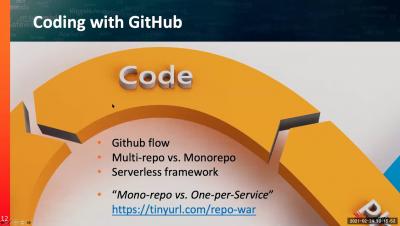
In this webinar, AWS Serverless Hero and Lumigo VP Engineering Efi Merdler-Kravitz presents Lumigo’s own journey in building a 100% serverless CI/CD pipeline.
As we move towards the end of our Kubernetes beta and get ready to "go-live" we discuss some of the exciting recent developments and future plans. We'll be answering your questions live on the call, as well as:
In this video, you’re going to learn exactly how to monitor your API in just 2 simple steps! To be clear: Monitoring an API is a lot of hassle. But with this video tutorial, you’ll know how you can monitor your API in just 2 simple steps while saving a lot of time. Think of Components like folders that contain other Fyipe resources and one of the resources it has is called "Monitors". An API monitor will basically test your API to gain visibility into performance, availability, and functional correctness.
DevOps has become the de facto method of developing and maintaining software, but it comes with its own challenges. Keeping track of change in a complex, fluid environment is a serious hurdle to overcome. In this webinar, we explained how machine learning can be employed within a DevOps team to improve operational performance, optimize mean time to recovery and create a better service for your customers.
The Conan team provides an introduction and demonstration for the open-source C++ graphics library known as ImGui. To show the basics of ImGui, we will create a simple application with some controls like buttons, scrollbars, color editors, and more. We will show how easily and quickly you can create a graphical user interface using this library. Finally, we will show how to a simple way to build ImGui using packages with Conan, the package manager for C and C++.
In this video, I'll explain what are Manual Monitors? You’re also going to learn exactly how to create a Manual Monitor in just 2 simple steps while saving a lot of time. Think of Components like folders that contain other Fyipe resources and one of the resources it has is called "Monitors". Manual Monitors are monitors that do not actively monitor any resources. You can use them if you are using an external monitoring tool and can ping Fyipe API to create incidents.
The Python Developer Survey for 2020 is out and this video pulls out 6 surprising insights that can help new and experienced developer improve their craft.