Operations | Monitoring | ITSM | DevOps | Cloud

Streamline Code Testing with Proxymock

Tired of complex setups and running out of memory just to test one component? Learn how to use Proxymock (a FREE tool) to solve your biggest testing headache: component isolation! This demo shows you how to record and mock interactions across a complex React, Golang, and PostgreSQL stack, allowing you to find bugs before they ever hit production. In This Demo: This strategy lets you easily isolate components, simulate customer behavior, and ensure quality with lightning-fast local testing.

Training Foundation Models on a Trillion Data Points with Apache Iceberg

Training an AI foundation model on over a trillion data points sounds impossible without hitting your production systems. Here's how Datadog did it with Apache Iceberg for their time series forecasting model TOTO. The key challenge: extracting massive historical observability data (metrics spanning years) and running incremental preprocessing pipelines without overwhelming production services. Iceberg solved this by providing schema governance, consistency guarantees, and seamless integration with ML tools like Ray and PyTorch.

Evidence as an Input

Evidence isn’t something you produce at the end — it’s something every control generates for the next one. In this video, Mike Long (CEO & Co-founder, Kosli) explains how vulnerability scans produce evidence tied to the artifact fingerprint and the policy file used, and how that evidence becomes an input to downstream controls like release approvals. This is the core of reusable, continuous compliance.

Why Release Control Takes Weeks

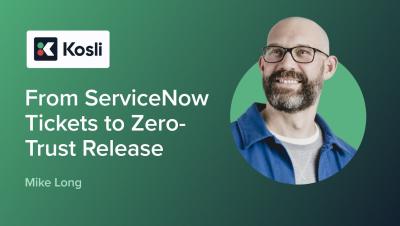
The industry standard for release control is painfully manual: long-form policy documents, ServiceNow forms, human approvals, meetings, and tickets that take days or even weeks to close. In this video, Mike Long (CEO & Co-founder, Kosli) explains the difference between manual release control and an automated, zero-trust model where evidence is collected automatically, provenance identifies the artifact, and approvals can be fully codified.

Tech Talk - Take action automatically on Splunk alerts with Red Hat Ansible Automation Platform

As digital and AI applications become more prevalent, the need for fast, efficient, and consistent management of IT operations is critical. This session will show you how to automate responses to Splunk Observability Platform alerts using Red Hat Ansible Automation Platform's Event-Driven Ansible.

Tech Talk - Splunk Observability for AI

In this Tech Talk, we’ll show you how Splunk’s agentic, AI observability delivers end-to-end visibility of the entire AI stack, from agents and large language models (LLMs) to the underlying infrastructure. You’ll see how AI Infrastructure Monitoring provides teams with data-dense dashboards and detectors for surfacing trends, patterns, and outliers to correlate application health with underlying AI infrastructure performance.

Setting up OpenTelemetry Demo in Kubernetes with Splunk Observability Cloud

Are you looking to explore the power of OpenTelemetry and Splunk Observability Cloud in a Kubernetes environment? This video provides a comprehensive, step-by-step walkthrough on how to deploy the OpenTelemetry Demo application in Kubernetes and seamlessly integrate it with Splunk Observability Cloud for metrics, traces, and logs! In this tutorial, you'll learn.