Operations | Monitoring | ITSM | DevOps | Cloud

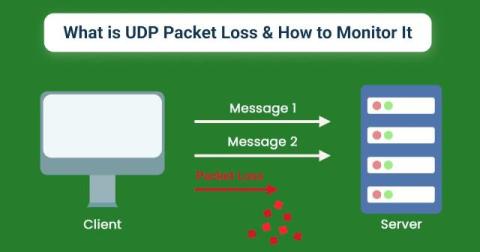
What is UDP Packet Loss & How to Monitor It

Have you ever found yourself scratching your head over UDP packet loss? You're not alone. UDP (User Datagram Protocol) is a go-to for streaming, gaming, and VoIP, but when packets start going AWOL, it can spell trouble for your network's performance. Imagine you're in the middle of an important VoIP call, a critical online gaming session, or a live video stream, and suddenly things get choppy or laggy—that's UDP packet loss rearing its ugly head.


How Digital Employee Experience (DEX) Solves One of IT's Biggest Challenges

The IT departments of companies have never been under so much pressure. With the rise of hybrid work, increasing technological complexity, and the need to maintain productivity and security, tech teams are overwhelmed, reactive, and often invisible in terms of their impact on the business. Amid all this, a new approach is gaining traction among IT leaders seeking efficiency, agility, and user satisfaction: DEX – Digital Employee Experience.

Why SaaS Infrastructure Monitoring Is Critical for Modern IT Operations

In today’s cloud-driven world, keeping track of your software services is no longer optional—it’s essential. SaaS infrastructure monitoring helps IT teams keep an eye on the performance, uptime, and health of all cloud-based applications and systems in real time. With businesses relying heavily on remote tools and digital platforms, monitoring your SaaS stack ensures smooth operations and quick issue resolution.

Application Performance Monitoring (APM) Use Cases Every DevOps Team Should Know

Modern applications are built using distributed architectures, microservices, and cloud-native technologies. As these systems grow in complexity, it becomes harder for DevOps teams to maintain performance, track issues, and ensure a consistent user experience across all environments. Application Performance Monitoring (APM) helps solve these challenges by providing real-time visibility into how applications behave, from user interactions to backend services and infrastructure.

Want recurring revenue? Deliver value - and prove it.

Recurring revenue streams bring stability to any business. For MSPs, that stability can be an essential foundation for service innovation and pursuing growth. Offering subscription-based managed services is an obvious way to get recurring revenue in place. Collaboration platforms like Microsoft Teams and Zoom are prime candidates for subscriptions since businesses depend on them every day, at all levels of the organization, to be productive and profitable.

How AI-driven Anomaly Detection Fortifies Compliance in Multi-Cloud Infrastructures

In a multi-cloud environment, each cloud platform brings its unique tech stack to record events, manage services, set up configurations, manage user access and permissions, etc. While this allows you to leverage the best-of-breed services from different cloud vendors, the complexity of this setup makes it challenging to detect and respond to anomalies across clouds in real-time.

Building Resilient Government IT: Strategies for Secure, Compliant, and Scalable Connectivity

As Australian government agencies progress in their digital transformation journeys, how can IT leaders innovate without compromising compliance, sovereignty, or operational stability? This blog was originally published on PublicSectorNetwork.com.au on 11th June 2025 and republished with permission.

Introducing UptimeRobot's official Terraform provider

We’re excited to announce the official release of the UptimeRobot Terraform provider, a feature that many of you have been requesting. Starting today, you can manage your UptimeRobot resources, including monitors, alerting integrations, maintenance windows, and public status pages, directly in your Terraform configuration. Let’s take a closer look.

Top Rancher Alternatives To Consider In 2025

Kubernetes orchestration isn’t getting any simpler. Today, teams are pushing into AI/ML, edge computing, and multi-cloud automation. And with that, you may be looking beyond Rancher. This guide walks you through today’s top Rancher alternatives, from enterprise-grade platforms like OpenShift to leaner developer-first tools like Lens and Portainer. With this intel, you can then decide which one fits your evolving stack, budget, and business goals.