Operations | Monitoring | ITSM | DevOps | Cloud

Turkeys, Tech, and Table Settings: A Humorous Guide to IT Security at Thanksgiving Dinner

Let’s set the table a bit. As you know, in the U.S., Thanksgiving is coming up. And recently I had a conversation with my 83-year-old mother about Thanksgiving. Of course, we came across the inevitable parallels between Thanksgiving dinner and network security! That’s what you would be thinking when talking about Thanksgiving dinner with someone right? Before we dive into the feast, let me set the table.

5 Tips For Consumers To Shop Safely This Black Friday

While it makes for bleak reading, the frenzy of sales and online shopping activity surrounding Black Friday, means this pre-holiday season is a key period for cybercriminals. And each year we see an increase in cyberattacks during what should be a feel-good time. With more consumers expected to be shopping online this year, the opportunity for fraudulent behaviour is rife. But that doesn’t mean we have to surrender to the risks of poor website security.

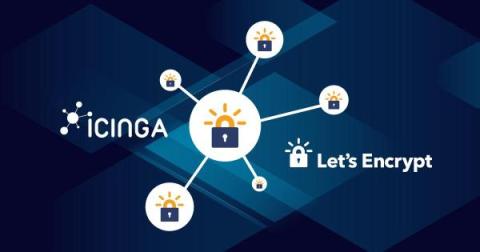
Icinga 2 API with Let's Encrypt certificates, just for fun

In our community forum Michael already outlined the possibility to operate Icinga 2 with an external certification authority, not the one Icinga 2 generates by itself. Thomas, one of our NETWAYS colleagues, reported his experience in that field: in short, it’s easy to mess up lots of things and hard to debug them. And I absolutely agree. At the moment I’m reading TLS Mastery from Michael W. Lucas.

New in Grafana roles: Manage user permissions better with 'No basic role'

Since we introduced role-based access control (RBAC) in Grafana 9.0, users — and later, service accounts — have been required to have an assigned role that includes a basic set of permissions. This sometimes led organizations to create users and service accounts that had more permissions than necessary. As a result, Grafana administrators had to make additional adjustments to users’ permissions on a case-by-case basis.

The Power of In-Person Engagement for MSPs

It’s easy to get caught up in the day-to-day demands of running your MSP business. Between servicing clients, tackling technical issues, and pursuing new opportunities, your schedules can fill up quickly. But while supporting your customers is essential, it’s also important to step back and give yourself time to work “on” and not “in” your business.

Elastic Observability monitors metrics for Google Cloud in just minutes

Developers and SREs choose to host their applications on Google Cloud Platform (GCP) for its reliability, speed, and ease of use. On Google Cloud, development teams are finding additional value in migrating to Kubernetes on GKE, leveraging the latest serverless options like Cloud Run, and improving traditional, tiered applications with managed services. Elastic Observability offers 16 out-of-the-box integrations for Google Cloud services with more on the way.

Solving Complexity Challenges with Kubernetes 360

Here at Logz.io, we realize Kubernetes is the most common infrastructure component that organizations are running on to keep their applications going. In return, we’ve made a big investment to support Kubernetes properly and give customers the tools they need to investigate and troubleshoot any issues that arise.

Monitor Amazon Bedrock with Datadog

Amazon Bedrock is a fully managed service that offers foundation models (FMs) built by leading AI companies, such as AI21 labs, Meta, and Amazon along with other tools for building generative AI applications. After enabling access to validation and training data stored in Amazon S3, customers can fine-tune their FMs to invoke tasks such as text generation, content creation, and chatbot Q&A—without provisioning or managing any infrastructure.

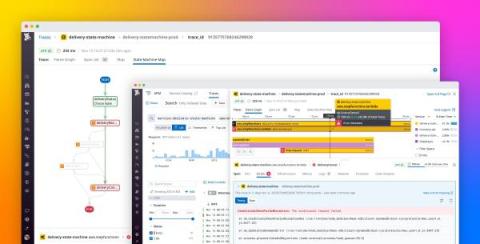
Visualize AWS Step Functions with the State Machine Map

AWS Step Functions allows you to coordinate activity from hundreds of services—including AWS Lambda, Amazon EKS, and Amazon API Gateway—to build and orchestrate serverless workflows. With Step Functions, you organize work into workflows known as state machines, in which each state defines a task or decision and specifies the next state in the workflow.