Operations | Monitoring | ITSM | DevOps | Cloud

6 Ways To Get Engineers More Involved In Cloud Costs

As a SaaS leader, you probably understand how crucial it is to get your engineers to make strategic cloud cost decisions. After all, your engineers are responsible for most of the cloud operating costs within your company. Unfortunately, getting engineers to care about costs isn’t always intuitive or easy. In fact, it’s commonly thought to be one of the most difficult challenges faced by SaaS leaders and FinOps specialists.
Why Hourly Granularity Is Necessary For Effective Cloud Cost Management

Cloud spenders of all sizes, but particularly those who have exceeded the $50,000 a month benchmark, know how challenging it can be to extract meaningful insights from their spend environments. As a digital-native company grows, its spend environment naturally gets more complicated — and without a strong organizational framework, what could be a treasure trove of data turns into a rat’s nest of semi-organized, confounding figures.

Lightning-fast troubleshooting for AWS: How to find the root cause fast with Sumo Logic

It’s time to stop firefighting. With Sumo Logic’s AWS Observability, companies like Snoop have been able to simplify data collection, achieve unified visibility across AWS accounts and regions and leverage machine learning to troubleshoot — fast. This re:Invent, we’re excited to showcase how our capabilities for AWS have evolved.

Enhance your visibility into OTel-instrumented apps in AWS Lambda

Enabling auto-instrumentation for your Lambda functions provides detailed insights into the performance and security of your serverless applications. Developers often also use custom instrumentation to fine-tune visibility and further tailor telemetry to their business needs. However, different teams within your organization might use a variety of instrumentation libraries, and achieving more granular visibility can come at the expense of data portability and interoperability.

Enhance your troubleshooting workflow with Container Images in Datadog Container Monitoring

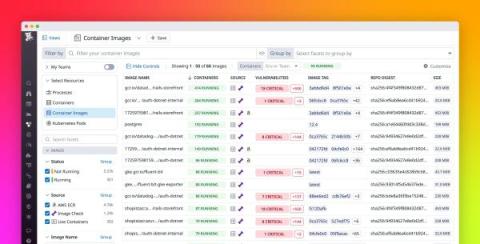
Containers are powerful tools for scaling and deploying your applications, but with so many components pulled from different sources, there’s a greater potential for issues within them to go undetected. As a result, you need to monitor every layer of your containerized environments for vulnerabilities and performance problems—from your application to your container images.

Monitor and improve your CI/CD on AWS CodePipeline with Datadog CI Visibility

CI/CD services such as AWS CodePipeline enable developers to automate and accelerate the process of building, testing, and deploying code. But with the speed, scale, and complexity of the modern software development life cycle, even small performance regressions or increases in failure rates in your CI system can quickly snowball, slowing or even halting releases and causing cost overruns.

Kibana vs Grafana: Battle Of the Dashboards

Every day, we generate tons of data, so much so that we cannot analyze them manually anymore. Visualization is a process by which the generated data will be broken down into smaller packages. Visualization extensively relies on observability and the triumvirate of Logs, Metrics and Traces. When it comes to visualizations and dashboards, Kibana and Grafana are two prominent names in the market. What makes them stand apart from their peers is their ability to conceive top-notch analytics charts.

What Is Cloud Scalability? Benefits And Tips For Every Organization

One of the major benefits of choosing the cloud over on-premise architecture is the ability to easily and quickly scale — but what does scalability mean in cloud computing? If your business is in the process of growing, it’s important to know your technology options so you can make informed decisions on how to scale. In this article, we cover scalability in cloud computing, its benefits, and more. Let’s get to it!