Operations | Monitoring | ITSM | DevOps | Cloud

Production Is Where the Rigor Goes

In early February, Martin Fowler and the good folks at Thoughtworks sponsored a small, invite-only unconference in Deer Valley, Utah—birthplace of the Agile Manifesto—to talk about how software engineering is changing in the AI-native era. They recently published a summary of key insights and themes from the summit, sorted into ten topical buckets.

Buy vs Build in the Age of AI (Part 3)

In Part 1, we looked at how AI has reduced the cost of building monitoring tools. Then in Part 2, we explored the operational and economic burden of owning them. Now we need to talk about something deeper. Because the real shift isn’t just economic; it’s structural. AI isn’t just helping engineers write code faster. It’s accelerating the entire software ecosystem; including how monitoring tools are built, maintained, and trusted.

Cloud Migration Statistics for 2026

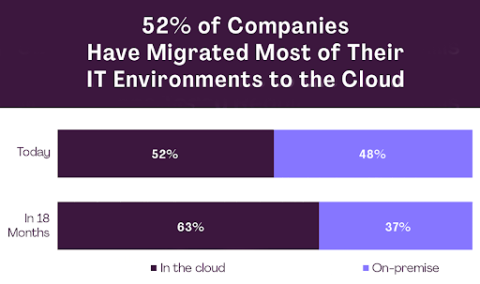
Cloud adoption has officially crossed a tipping point. In 2026, the conversation is shifting from whether companies are moving to the cloud to how complicated things are getting once they’ve moved. Hybrid architectures, multi-cloud strategies, AI workloads, and rising security pressure are turning “the cloud” into a web of interconnected environments. For IT and network teams, that creates huge opportunity—and plenty of room for chaos if visibility doesn’t keep pace.

Taming the Broker Network: Achieving Reliable Apache ActiveMQ Operations

Broker networks grow from success but often become fragile webs. A global retailer's journey from Apache ActiveMQ chaos to reliable operations shows how unified visibility, automation, and governed self-service transform messaging from liability to strategic asset.

Cost Optimization in Action: How We Cut Amazon SQS Costs by 87%

JC, the Director of Software Engineering, Cloud at LogicMonitor, shares how Cost Optimization enabled his team to shift to Cost-Intelligent Observability and tackle an unexpected and growing cloud bill. As engineers, we live and breathe performance. We obsess over latency, reliability, and uptime, the hallmarks of a healthy system. But there’s another metric that’s becoming just as critical: cost.

Monitor your application and network load balancer logs

Load balancers are the primary entry points to distributed applications. By strategically directing the flow of incoming web traffic to specific endpoints, load balancers help optimize throughput and ensure the horizontal scalability of applications. In modern systems, load balancers often do more than their name suggests: Beyond basic load distribution, they analyze requests and route traffic based on a wide range of variables, such as client identity.