

Operations | Monitoring | ITSM | DevOps | Cloud

Pull Request Velocity as a Proxy for AI Usage for Software Development

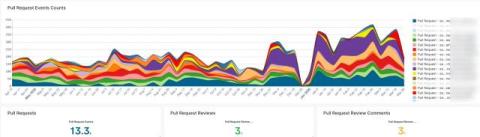
While AI have usage has been growing steadily for the last several years, the LLM models noticeably improved around the end of 2025. Specifically, they become more viable for software development. We are seeing the results. The feature and product delivery has picked up. One way to visualize this is by looking at the number of pull requests for your organization / software development teams. This chart shows the number of Github pull requests created by a team. Can you spot when AI usage increased?

What is MRO? Maintenance, Repair, and Operations Explained

MRO stands for maintenance, repair, and operations. It refers to the activities, supplies, and services that keep equipment, facilities, and infrastructure running safely and efficiently. Every industry that relies on physical assets depends on MRO, whether that means replacing a worn bearing on a production line, restocking safety gloves in a warehouse, or servicing an HVAC system in a hospital.

API Endpoint Monitoring: How to Ensure Reliability, Performance & Functional Accuracy

APIs sit at the core of modern digital infrastructure. From e-commerce checkouts and payment processing to SaaS platforms and mobile applications, APIs move the data that keeps systems running. But APIs do not operate as a single unit. They are made up of individual endpoints, and each endpoint represents a specific function or resource that users depend on. As organizations shift toward microservices, cloud native applications, and third party integrations, the number of endpoints increases rapidly.

API Latency Monitoring: Metrics, Percentiles, and Alerting Best Practices

APIs power modern applications. Every login request, product search, payment authorization, and mobile app refresh depends on an API responding quickly and reliably. When latency increases, users feel it immediately. Pages stall. Transactions hang. Confidence drops. Most engineering teams measure API latency. Fewer truly monitor it. There is a difference. Many teams track average latency in dashboards and assume performance is healthy.

Logging in Next.js is hard (But it doesn't have to be)

A typical Next.js deployment can execute code in up to three different runtimes: Edge, Node.js, and the browser. You may already be capturing logs from server-side code, but if you are not capturing the full request from middleware through server rendering to the browser, you are missing a lot of debugging info when things go wrong. TL;DR: A typical Next.js deployment can run in up to three environments; Node, Edge, and the browser.

What is the Citrix License Activation Service (LAS)?

One of the hot topics from our recent Citrix-focused webinar was the Citrix License Activation Service (LAS). I had the chance to present alongside George Spiers— Citrix Expert and EUC Architect —and we walked through what LAS is, how it works, and what teams should be aware of.

DevOps Workflow Strategy for Startups: 7-Step Guide (2026)

Reliability is the foundation of successful startups. Your product could have the most innovative features, but if it's plagued by downtime or performance issues, customers will eventually jump ship. Fortunately, creating an effective DevOps workflow strategy doesn't have to be complicated. This guide breaks down the essential components and implementation steps that startup DevOps and SRE teams need to focus on.

Incident Response Automation Guide: Cut MTTR by 33% in 2026

Every minute matters when you're dealing with a security incident. The longer a breach goes undetected and unresolved, the more damage it can cause to your systems, data, and reputation. But traditional incident response is plagued with challenges: alert fatigue, manual processes, skill shortages, and the sheer complexity of modern IT environments. Security teams are drowning in alerts while struggling to respond quickly enough to the threats that matter.