Operations | Monitoring | ITSM | DevOps | Cloud

Five Ways Avantra Makes SAP More Secure

Enterprises use SAP well beyond simple back-office only accounting software. Today’s SAP systems are highly integrated and used by thousands of people daily across dozens of departments, and that’s just for a single large enterprise! As a central part of business operations, getting SAP security right, and durable operations with it, have become essential responsibilities for IT teams.
The Agent Runtime Needs an Enterprise Brain: Why Fabrix.ai Completes the NemoClaw / DefenseClaw Stack

The agentic AI security stack is taking shape , fast. At GTC 2026, NVIDIA unveiled NemoClaw, an open-source stack that wraps OpenClaw with enterprise-grade privacy controls, local inference via Nemotron models, and the OpenShell sandboxed runtime. Days later at RSAC 2026, Cisco launched DefenseClaw, an open-source governance framework that scans every agent skill, MCP server, and plugin before admission , and enforces block/allow policies at runtime with sub-two-second enforcement.

Node Groups: Organize Your Infrastructure Into Reusable Views

When you’re managing a handful of nodes, the flat list in the nodes tab works fine. When you’re managing hundreds or thousands, it becomes a wall of hostnames. You end up applying the same filters repeatedly: all the production database servers, all the nodes in eu-west, all the Kubernetes workers in the staging cluster. The filters work, but they don’t persist, and there’s no way to share them with the rest of your team. Node groups solve this.

Unified Logging for a Single Source of Truth

In Star Trek, the Borg are a cybernetic alien organism that forcibly assimilates other beings and technologies into its hivemind called “The Collective.” Each assimilated being or technology becomes part of the unified consciousness, with the villainous Borg Queen as the leaders. As the only independent thinker, the Borg Queen leads this rapidly adapting Collective.

Checkly Playwright Reporter: A Cloud Dashboard for Your Playwright Tests

The Checkly Playwright Reporter is an npm package that sends the results of npx playwright test to Checkly as a cloud test session, including traces, screenshots, videos, and full debugging context. Run your Playwright suite in CI or locally, and every result gets a persistent, shareable home in Checkly with AI-powered analysis, richer trace-derived views, and a direct path to production monitoring. It does not replace Playwright. It makes the output of Playwright much easier to work with.

What Metrics to Monitor in Your Vibe Coded App

These days, using a tool such as Cursor, GitHub Copilot, Zed, or Claude makes it easier than ever to develop and deploy applications. You express your requirements, receive the completed project back as output, and there you have it! You now have an application that is in production and functioning. However, the surprise comes after the app has been deployed. When your app breaks or behaves abnormally, it may not be immediately obvious what is wrong or how to fix it.

Measure the business impact of every product change with Datadog Experiments

Modern product teams ship features constantly. Every change—whether it’s a new onboarding flow, pricing tweak, or UI adjustment—raises the same question: Did this improve the product? AI has changed the stakes entirely: As release cycles accelerate and code generation scales across every team, the volume of changes has outpaced most teams’ ability to measure their true value.

From Honeycomb Customer to Bee: An Observability Champion's Journey

One of the most important and meaningful cornerstones that has defined and powered my career so far has been how I try to use my skills and talents to make the people around me stronger and achieve positive outcomes. My roles in tech have predominantly been in the ops engineering domain. I consider myself an ops engineer; a title I wear with pride.

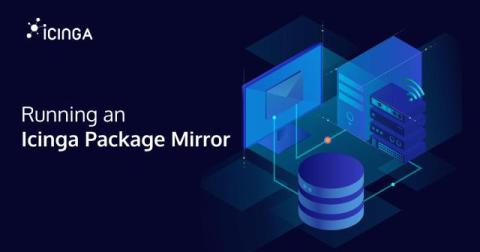
Mirroring Icinga Packages in Air-Gapped and Restricted Environments

When hosting in a secure or corporate environment, Internet access is often restricted or blocked completely. While this makes sense from a security point of view, this introduces some challenges. For one, getting software packages. There are usually two approaches to the package problem in such an environment: Either allow a certain package mirror in the firewall, or run your own mirror within the restricted environment with access to another package server to mirror packages from.