Operations | Monitoring | ITSM | DevOps | Cloud

TV Mode: Put Your Dashboards on the Big Screen

One of the most common requests we’ve gotten since launching custom dashboards is deceptively simple: “How do I put this on a TV?” Teams want their dashboards on wall-mounted screens in NOCs, war rooms, and open office spaces. The dashboard is already built. The data is already there. They just need a way to display it on a screen that nobody is logged into, without exposing the full Netdata Cloud interface. TV mode does exactly this.

Offline evaluation for AI agents: Best practices

If you’re building LLM-powered applications and agents, you’ve probably asked yourself: “How do I know if my changes actually made things better?” You can tweak prompts, adjust temperature settings, or try different models, but it’s not always easy to validate whether version B’s response is better than version A’s. Most teams fly blind in preproduction and rely on user feedback to see how well their application works in the real world.

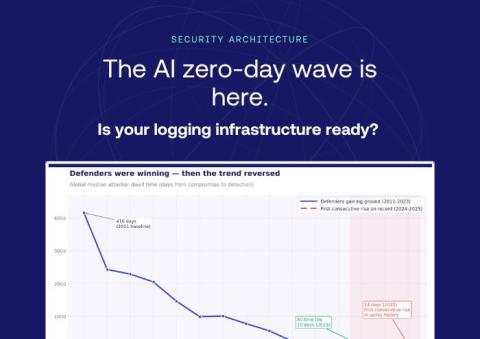
The AI Zero-Day Wave Is Here. Is Your Logging Infrastructure Ready?

Last week, the cybersecurity industry received a signal it cannot afford to ignore. Anthropic announced Claude Mythos Preview: a general-purpose frontier AI model that, without any explicit training for the task, autonomously discovered and fully exploited zero-day vulnerabilities across every major operating system and web browser. Not theoretical capabilities.

Tracing a Slow Request Through Your Django App

Slow endpoints are difficult to detect because they don’t fail. They simply get slower and slower. Average latency may look fine, but that can be misleading. That’s why we need to look at other values, like p90 and p95, which often reflect what’s really going on. For example, p90 represents the slowest 10% of requests, and p95 represents the slowest 5%. When these values increase, users start experiencing delays.

The Trust Layer: Why Enterprise AI Needs a Gateway Before It Needs More Models

Enterprise AI does not have a model problem. It has a trust problem. Before organizations invest in larger models or additional agents, they need a control layer that governs how those agents operate inside production systems. Without that layer, autonomy does not scale. If you talk to any enterprise leader right now, you’ll hear the same question.

5 Best Website Monitoring Tools in 2026

The five best website monitoring tools in 2026 are Hyperping (all-in-one monitoring with on-call and status pages), Better Stack (monitoring plus logs and traces), UptimeRobot (budget-friendly with a generous free tier), Uptime.com (enterprise SLA reporting and synthetic monitoring), and Datadog (large-scale infrastructure monitoring). I tested 15 tools over three weeks, measuring check speed, alert accuracy, integration quality, and real-world pricing at different scales.

Top 6 AI SRE Tools and Why Runtime-Grounded Reliability Is the New Standard

AI SRE tools accelerate incident detection, root cause analysis, and remediation across distributed production systems. They ingest telemetry signals, including logs, metrics, traces, alerts, and deployment history, to correlate anomalies, narrow fault domains, and reduce manual triage. This guide breaks down the top AI SRE tools in 2026 and helps you choose the right one based on your team’s biggest bottleneck, whether that is faster triage, deeper root cause analysis, or runtime-level validation.

Optimizing the OpenTelemetry Python SDK for LLM Workloads

Agentic workloads thrive with precision tooling. Just like developers, they need the rich context, high cardinality, and fast feedback loops that allow them to ask exploratory open-ended questions of their code. But instrumentation is costly, and from the dawn of software, developers have tried to do the most possible with the least amount of resources.

Putting FinOps theory into practice with SquaredUp

The public cloud has revolutionized IT by making infrastructure on-demand, scalable, and self-service. However, this convenience comes at a price. In the cloud, engineers can instantly spin up resources and spend company money with the click of a button or a line of code, bypassing traditional procurement and finance approval processes.

How to manage synthetic monitoring checks as code with Terraform and Grafana Cloud

As teams scale, managing synthetic monitoring checks manually in the UI becomes difficult and error-prone. When you're dealing with dozens of checks across multiple environments, teams experience inconsistent configurations, lack of version control, and difficulty tracking changes.