Operations | Monitoring | ITSM | DevOps | Cloud

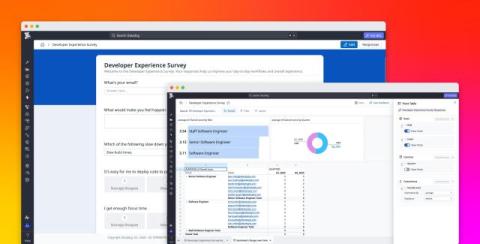
Turn developer feedback into operational insight with Datadog Forms and Sheets

Engineering organizations rely heavily on developer feedback to improve internal platforms, tooling, and processes. However, that feedback is often scattered across disconnected systems such as external forms, spreadsheets, chat threads, and documentation tools. Because these systems are separate from operational data, teams struggle to correlate developer sentiment with measurable performance or reliability outcomes.
New: SSL Certificate Monitoring, Security Center, Domain & SSL Expiration Tracking - Plus Our Affiliate Program

DNS Spy now goes well beyond DNS record monitoring. We've shipped SSL certificate discovery and security auditing, expanded the Security Center to 40+ automated checks across six categories, and built expiration tracking for both domains and SSL certificates — with tiered alerts so nothing expires without warning.

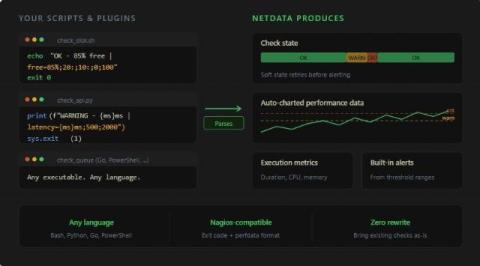
Nagios Plugins Collector: Run Your Existing Checks and Custom Scripts Inside Netdata

A lot of teams have a collection of Nagios plugins and custom monitoring scripts that have been running reliably for years. Some are standard community plugins for checking disk health or SSL certificate expiry. Others are homegrown Bash or Python scripts that check something very specific to the business: whether an API endpoint returns the right payload, whether a batch job completed on time, whether a queue depth is within bounds.

Modernizing a legacy CMake build-system

CMake tends to have a bad reputation for being to complex and convoluted, but often that notion stems from very old versions of CMake. Sure, CMake is a Turing-complete scripting language, but that is really needed for an ecosystem as complex as that of C and C++. And as Greenspun’s tenth rule of programming goes: There are countless build-systems and build-system generators for the C/C++ ecosystem. Some of them tried to use a simple, declarative approach.

Forget user experience, the age of user extraction is here

Does it ever feel like the days of simple, user- and pocket-friendly digital services are now a bygone era? Is everything just a reminder of how things used to be better? Dramatic language and rose-tinted glasses aside, you would be naive not to notice that service providers are becoming increasingly predatory, especially when it comes to monetization. Ads are everywhere, privacy policies are questionable at best, and costs keep rising.

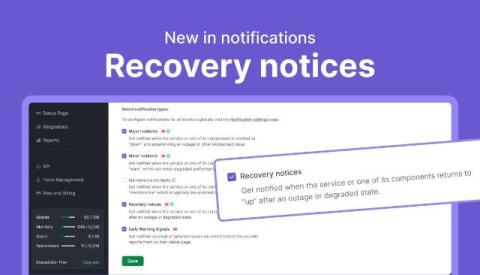
New: More control with Recovery Notices

We’ve added a new notification option to give you more control over how and when you get alerted: Recovery Notices. Until now, notifications were primarily focused on incidents – letting you know when something goes wrong. But we heard from many of you that not all alerts are equally useful. While some teams want full visibility across the entire lifecycle of an incident, others are mainly concerned with when a service goes down, not when it comes back up.

Moving Beyond SolarWinds: Building a Modern Observability Strategy

For years, platforms like SolarWinds have been a standard in IT environments. They helped teams answer a fundamental question: are systems up or down? That approach worked well when environments were more contained and predictable. The challenge is that most environments no longer operate that way. Hybrid infrastructure, cloud services, and tightly interconnected applications have changed what “visibility” needs to mean.
Sponsored Post

From Microsoft SCOM to Dashboards

System Center Operations Manager (SCOM) remains one of the most capable on-premises monitoring platforms for Microsoft environments. However, as IT operations evolve toward real-time observability and self-service insights, traditional SCOM reporting and consoles can feel restrictive. This whitepaper explores practical ways to extend and modernize your SCOM visualizations using today's leading dashboarding technologies - including SquaredUp, Grafana, Power BI, and Azure Workbooks.