Operations | Monitoring | ITSM | DevOps | Cloud

What are operational maturity levels (OMLs) for MSPs?

Service Leadership, a leading company that works to measure IT and managed service provider (MSP) performance, defines the five levels of operational maturity for solution providers. Often referred to simply as operational maturity levels (OMLs), OMLs help managed service providers (MSPs) measure how consistently, intentionally, and effectively they run their businesses.

Code Agents Need Observability

For those of us using tools like Claude Code, Codex, or Gemini, we already know they’re powerful. They can write code, refactor functions, open PRs, even run commands. For a lot of developers, they’re already part of the daily workflow. But once you zoom out beyond the individual developer, the biggest problem isn’t productivity. It’s control. AI coding tools are powerful, but they introduce a new, unpredictable cost layer that most teams don’t fully understand.

What is AI SRE? The Complete Guide to AI-Assisted Site Reliability Engineering

It's 2:47 AM. PagerDuty fires. You open a Slack alert and see: p99 latency spike on checkout-service. You SSH into the host, check dashboards in four tabs, grep logs for the last 20 minutes, and eventually find a slow query introduced in a deploy six hours ago. It took 34 minutes. You resolved it, w Prathamesh works as an evangelist at Last9, runs SRE stories - where SRE and DevOps folks share their stories, and maintains o11y.wiki - a glossary of all terms related to observability.

Capturing HTTP Request and Response Bodies in .NET Traces with PHI Redaction

> Standard OTel.NET instrumentation captures headers, status codes, and timing — not request or response bodies. Here's how to add body capture to your traces while keeping PHI out of your observability backend. Prathamesh works as an evangelist at Last9, runs SRE stories - where SRE and DevOps folks share their stories, and maintains o11y.wiki - a glossary of all terms related to observability.

Cloud Security Best Practices Every Company Should Follow

Cloud adoption has accelerated dramatically over the past few years - and with it, so has the attack surface for cybercriminals. Whether you're a five-person startup or a 500-employee enterprise, moving your operations to the cloud without a solid security strategy is one of the most expensive mistakes you can make right now.

GitHub outage on April 23, 2026

On April 23, 2026, the first signs of trouble with GitHub did not come from its status page. They came from users. As reports began surfacing across developer communities, including discussions on Hacker News, engineers described failed workflows and unexplained server errors. At that point, GitHub had not yet acknowledged any issue. StatusGator, however, was already seeing the pattern and issued an Early Warning Signal at 14:33 UTC.

Introducing StatusGator's Accessibility Conformance Report (VPAT)

At StatusGator, accessibility is a core part of how we build and deliver our product. Today, we’re sharing our latest Accessibility Conformance Report (VPAT), which reflects our ongoing commitment to creating inclusive and usable experiences for everyone.

A Bettter Way to Run Network Operations: How Actionable Correlation Eliminates Alert Chaos

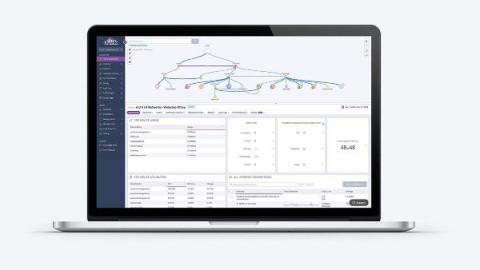
Anyone who has spent time in a NOC knows how quickly a routine issue can turn into a scramble. A user in a branch office reports that a critical application is unavailable. Slack starts lighting up, dashboards begin to fill with warnings, and before long several teams are trying to answer the same basic question at once: what exactly is broken, where is it broken, and who owns the next move?

Database Performance Monitoring: Query-Level Visibility Across 14+ Databases

Netdata has always collected database metrics: connections, throughput, replication lag, buffer cache hit ratios, and so on. These tell you that something is wrong, but they don’t tell you why. When your PostgreSQL response time spikes, the metric alone doesn’t tell you which query is responsible. For that, you’ve traditionally needed to SSH into the box, connect to the database, and run diagnostic queries manually. Or set up a separate database monitoring tool entirely.