Operations | Monitoring | ITSM | DevOps | Cloud

Accelerating MTTR with Faster Root Cause Diagnosis: AI Advisor Now Supports On-Demand Connectivity, Config Context, and Device Diagnostics

Knowing something is broken is easy. Figuring out why is hard. Introducing three new, native AI diagnostic capabilities in the Kentik Network Intelligence Platform to accelerate root cause analysis and keep your network running better.
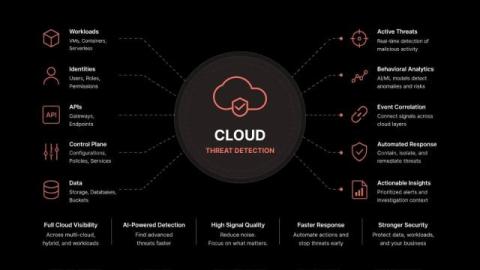
What is Cloud Threat Detection? An Ultimate Guide for 2026

What if the next breach in your cloud is already in motion, and your team has no idea how to see it? Cloud workloads are growing fast. APIs, identities, and data are spread across AWS, Azure, GCP, and on-prem systems all at once. Every layer creates its own logs, its own alerts, and its own blind spots. Most security teams are short on visibility, context, and time. That is the gap cloud threat detection is built to close.

ActiveMQ Security Hardening: TLS, JAAS, LDAP & CVE Patch Guide

In October 2023, security researchers published CVE-2023-46604, a CVSS 10.0 remote code execution vulnerability in Apache ActiveMQ. Within days, it was being actively exploited in ransomware campaigns. The attack required nothing more than network access to port 61616. No authentication, no credentials, no social engineering. The attacker connected to the standard ActiveMQ port and executed arbitrary code on the server.

AI Supply Chain Attacks Are Here. And Most Organizations Aren't Ready

When I read about the Vercel breach tied to a Context AI compromise, I wasn’t surprised. I’ve been talking with customers for a while now about how AI was going to introduce a new kind of supply chain risk. This is exactly what that looks like. What stands out to me is how familiar the pattern is. We saw it with open source, then again with SaaS, and again with cloud.

Why Does MTTD Stay High Despite Observability Tools Running?

Monitoring coverage, anomaly detection, and SLO-based alerting have significantly narrowed detection windows for most failure types, but MTTD remains stubbornly high for a specific silent failure. This blog covers why type mismatches, swallowed exceptions, and values that pass validation without occurring without triggering errors, and what changes when your monitoring stack can generate those signals without waiting for a failure to surface them.

How the Coralogix CLI Adds Production Intelligence to Any Agent for Any Use Case

The new interface into production telemetry is a tool call, made from whichever agent runtime the operator happens to be using at that moment. A finance lead in Claude Code, a product manager in Cursor, an engineer in Codex. Three different jobs, three different agents, three different reasoning loops. The thing they have in common is the data layer underneath.

May the Logs Be With You: Graylog 7.1 Is Here

A long time ago, in a SOC far, far away…analysts were drowning in alerts, chasing context across fragmented screens, and watching real threats slip past detection gaps. Today, the Rebellion fights back. This isn’t a release built around a single marquee feature. It’s the result of our team listening to you on the front lines with an ear for removing the friction that makes your jobs harder than they need to be.

This Month in Datadog - April 2026

In the latest episode of This Month in Datadog, Jeremy shares how to run autonomous Cloud SIEM investigations, remediate vulnerabilities with auto-generated fixes, and use natural language to explore Datadog. Later, Sumedha Mehta spotlights the Datadog MCP Server, which gives AI agents real-time access to Datadog’s observability data. Then, Chetan Sharma walks through Datadog Experiments, which measures how product changes impact the user journey.

Monitor and optimize Supabase query performance with Datadog Database Monitoring

Built on Postgres, Supabase is an open source, all-in-one backend platform for developers who want to ship applications without managing infrastructure. This makes it especially popular with frontend developers and vibe coders who may have little to no database expertise. Datadog's Supabase integration provides high-level infrastructure metrics, but developers also need query-level visibility to easily diagnose, optimize, and trace performance issues back to their source.