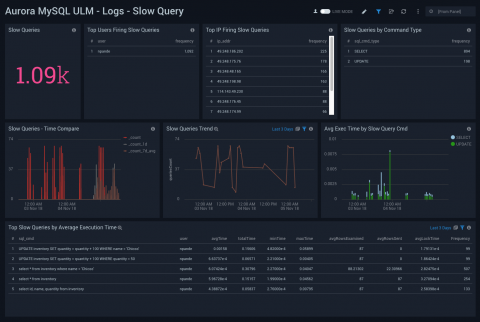
Sumo Logic provides digital businesses a powerful and complete view of modern applications and cloud infrastructures such as AWS. Today, we’re pleased to announce complete visibility into performance, health and user activity of the leading Amazon Aurora database via two new applications – the Sumo Logic MySQL ULM application and the Sumo Logic PostgreSQL ULM application.
In today’s fast-paced working environment, employees tend to rely less and less on IT departments. The use of workplace technology has never before been this accessible and essential and employees are increasingly confident that they can work independently from IT to decide on their own external tools and solutions.
In my world, customer-driven is beating data-driven’s ass.
The majority of the public has a decent general knowledge of technology, especially as younger generations grow up surrounded by phones, tablets, and virtual reality simulations. However, with technology as an industry spanning across many categories and developers creating new specialisms each year, there are still those who distinguish themselves and emerge into the industry with revolutionary ideas.
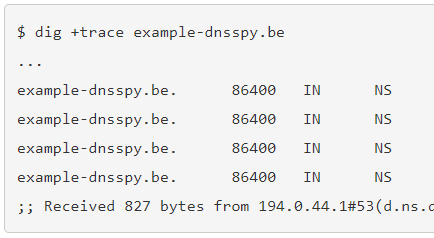
Ever since the launch of our DNS scan, we’ve had the warning about mismatched NS records. Many users choose to ignore this, but there’s a pretty good reason we give a big warning whenever those records don’t line up. In this blogpost, we’ll show what can happen with misconfigured NS records.
Performance monitoring in today’s all-digital world is not a luxury; it’s a necessity. Whether the data center is running on-premises or workloads are hosted in the cloud, IT operations teams must incorporate monitoring into service delivery and enablement. Monitoring is an early warning system that alerts IT operations when something has gone wrong or is about to go wrong: e.g., application slowness, downtime and outages, configuration changes, capacity issues, and so on.
Programming requires special knowledge and dedication. Being a good programmer also requires valuable skills; all this makes the foundation quite solid and it is the starting point for great programs and, who knows, we may even produce a killer application!
We are pleased to announce the first open source release of our X.509 module for Icinga. The X.509 module for Icinga keeps track of certificates as they are deployed in a network environment. It does this by scanning networks for TLS services and collects whatever certificates it finds along the way. The certificates are verified using its own trust store.
If you’ve been shopping recently, you may or may not have seen stores and shops with screens, promotional videos, product images, statistics, etc. Normally, for this purpose the computers are hidden. These computers have immense power consumption, being on all day just to show something on the screen.