An interview series with the people building Mezmo’s open-source agentic harness for production operations. Builder in the loop is a Mezmo interview series focused on the engineers, product leaders, and operators shaping AURA, our open-source, MCP-native agentic harness for production operations. The goal is to get past the polished product layer and talk through the decisions that matter when AI starts interacting with real systems. What should agents be allowed to do?
Every persistent message in ActiveMQ must survive a broker restart. That guarantee is the contract behind DeliveryMode.PERSISTENT is what separates a messaging system from a memory buffer. It is also what makes message persistence configuration the most consequential decision in ActiveMQ architecture.
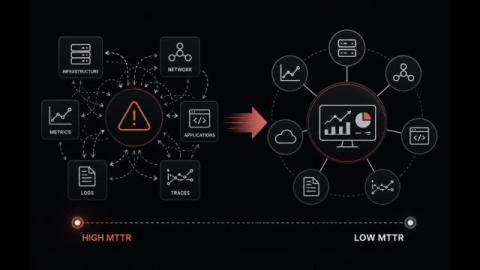
Are you spending more time figuring out whose problem it is than actually fixing it? If that feels familiar, you are not alone. Many IT teams start their day with multiple dashboards and tools, yet still struggle to understand what is wrong when something breaks. Everything may look fine in one view, and fine in another, but the customer impact tells a different story. Incidents end up taking longer to resolve than they should. This is not about effort or capability.
Today, we are going to look at a few things related to handling secrets. While Icinga 2 has no dedicated mechanisms for secret handling, there are a few tricks you can do with standard features. This is not meant as a step-by-step tutorial, but rather as an inspiration where you can adopt the ideas that make sense in your setup.
Automating root cause analysis is often regarded as the holy grail of IT operations. A solution capable of automatically identifying issues, resolutions and even prevention. Performed correctly, automated root cause analysis accelerates MTTI (Mean Time to Identify) and MTTR (Mean Time to Resolution). But for many platforms, this goal remains elusive: complexity, differences between deployments and different architectures make automating root cause challenging.
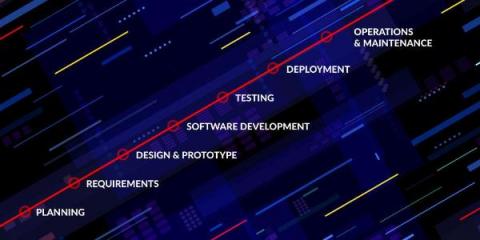
The Software Development Life Cycle (SDLC) describes the process we follow to deliver software to customers. It captures each step of creating software, from ideation to delivery and eventually to maintenance. In this post, we've broken down everything you need to understand the SDLC.
DNS Check now supports monitoring CAA records. A CAA record (Certification Authority Authorization record) tells public certificate authorities (CAs) which of them, if any, are allowed to issue TLS/SSL certificates for your domain. Public CAs have been required to honor these records since 2017, so CAA records act as an access control list for certificate issuance.
Enterprises are pouring billions into GPUs and AI compute, but most are overlooking the infrastructure that connects it all. Justin Ryburn, field CTO at Kentik, makes the case that the network is the most underestimated variable in whether AI initiatives succeed or fail.
When we shipped TV mode, we heard almost immediately: “Great, but I have five dashboards and one screen.” A single dashboard on a wall display covers one view of your infrastructure. If you want to rotate between your network overview, database health, application metrics, and infrastructure summary, someone has to walk over and click, or you’re buying more screens. Dashboard playlists solve this.