Operations | Monitoring | ITSM | DevOps | Cloud

How Honeycomb Is Embracing the Challenges of End-to-End Observability with Embrace

Customers regularly come to us looking to solve their observability problem by connecting the dots from frontend to backend. It sounds straightforward in theory, but in practice it's one of the hardest problems in modern application monitoring. The frontend monitoring tools they already have in place tend to be proprietary or narrowly scoped to frontend needs, leaving them without the context-rich backend data that makes real triage possible.

Autonomous IT Needs Internet Performance Monitoring: Why Internal Visibility Alone Is No Longer Enough

Internal visibility isn’t enough for modern incident response. Your app team has three dashboards open and everything looks fine. CPU is healthy, memory is stable, the application servers are responding normally. But users are still complaining. The checkout page is slow. Logins are timing out. Support tickets are piling up. And your monitoring tools have nothing useful to say about why.

Get Lightrun AI Skills: Expert Workflows for AI Agents

Today we’re launching Lightrun AI Skills, structured, repeatable investigation workflows built for AI coding agents. With Lightrun MCP, agents like Claude Code, Codex, and Cursor can already instrument live production services and reason over live runtime evidence without a redeployment. But AI agents remain non-deterministic by design, using the same tool differently every session.

Reverse DNS Does Not Match SMTP Banner: What It Means and How to Fix It

When your mail server connects to a recipient server to deliver email, the very first thing it does after the TCP connection is established is introduce itself. That introduction happens through the EHLO command (or its older predecessor HELO), and it looks like this: That hostname in the EHLO line is your SMTP banner. It is what your server claims to be.

SOA Expire Value Out of Recommended Range: What It Means and How to Fix It

The Start of Authority record is the first record in any DNS zone file. It's the record that says "this zone exists, this is the primary nameserver in charge, and here are the timing rules that govern how this zone behaves." A full SOA record looks like this when you query it: Each of those numbers does something different. The one that triggered your warning is the Expire value, the fourth number. In this example, 1209600 seconds, which is exactly 14 days.

The Importance of Time Synchronization in Windows Authentication

Kerberos is a secure network authentication protocol that allows users and systems to prove their identity over a network without sending passwords in plain text. It is widely used in enterprise environments (for example, in Windows domains) to enable single sign-on (SSO). At its core, Kerberos uses a trusted authority called the Key Distribution Center (KDC) to issue encrypted “tickets” that verify identity.

Cache-busting magic variables for uptime checks

Over the weekend, my own site went down and Oh Dear didn't catch it. The origin server had fallen over, but Cloudflare happily kept serving the cached HTML. Everything looked fine from the outside. Embarrassing. Scratching our own itch here, we just shipped magic variables: short placeholders you can drop into your monitor URL, request headers, or POST payload. Right before each check, we replace them with fresh values, so every request is unique enough to slip past any cache and actually hit your origin.

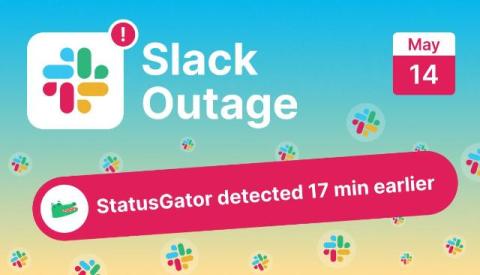
Slack outage on May 14, 2026

On May 14, 2026, users across multiple regions began reporting problems with Slack, including messaging failures, sign-in issues, and problems loading attachments and images. While the outage did not affect every user, reports quickly showed the issue was widespread enough to disrupt business communication for organizations around the world. StatusGator identified the incident through customer outage reports and triggered an Early Warning Signals alert at 14:21 UTC.

Product Update - May 2026

IncidentHub's latest product updates include a new Business plan with Teams support, early outage detection v1, and more integrations with ticketing systems. The public status now includes a disable feature. As before, many features are driven by feedback, and I am grateful to all our customers who have shared their feedback with us.