Operations | Monitoring | ITSM | DevOps | Cloud

SIEM alerts: everything you need to know

Let's walk through setting up SIEM (Security Information and Event Management) alerts to monitor security threats in applications. We will explain what SIEM alerts are, why they're relevant with regard to application security, and provide practical examples of common alerts a developer could implement. We will show how to configure simple alerts with Honeybadger Insights.

Closing the Evidence Gap

Compliance teams are entering a moment where the expectations placed on them far exceed the visibility tools they have available. AI-driven environments introduce new forms of variance, drift, and distributed decision-making that unfold across infrastructure, models, agents, and services. These patterns do not map cleanly to the evidence structures that compliance processes rely on.

Meet the new Mobot: Your log analysis partner

Every single day, the Sumo Logic Platform analyzes more than four exabytes of log data. The good news? The answers to your application performance, infrastructure health, and security incidents are hidden in those logs. The challenge? Historically, uncovering those answers required query language fluency. That’s why we built Mobot, our conversational interface that connects users to advanced AI capabilities using natural language.

Elevate Your MSP: From Reactive IT to Proactive Digital Experience Assurance

Internet Performance Monitoring (IPM) is essential for MSPs to move from reactive support to proactive experience assurance. Green lights on your internal dashboard don’t mean users are having a good experience. That was the central tension in this conversation between LogicMonitor RVP of Managed Services, Daniel Gad, and Catchpoint Field CTO, Gerardo Dada, and it’s a problem most MSPs haven’t fully solved.

What is Patch Management and Why is It Important? A Complete Guide

Patch management is one of the cheapest security steps you can take, and one of the most often ignored. Most IT teams know they are behind on patching. They just disagree on how far behind they actually are. Here is the simple truth: That waiting period is the problem patch management exists to solve. This guide covers what patch management actually is, how the full process runs from start to finish, where most teams quietly fall behind, and what to look for in a tool that holds up today.

Using AI to Instrument Applications with OpenTelemetry

OpenTelemetry is one of the best things that’s happened to observability in the last decade. It’s open. It has SDKs for every language that matters. It’s vendor neutral. The OTel community has been doing the hard work of standardizing how applications emit telemetry, so that you, the engineer, don’t have to learn five different agent formats to monitor five different services.

The product analytics you already have

You already have everything you need. If you’re using Sentry, you have traces, structured logs, and now application metrics. Most teams use that stuff for debugging and stop there. But get this: that same data can answer most of the product questions you’ve been sending to a separate analytics tool, maintained by a separate team, with a separate data model and a separate bill. (Not all of them.

A Runnable Reference Architecture for Network Telemetry on InfluxDB 3

Networks generate the most data of any system in your stack and have the least patience for stale dashboards. Interface counters tick every second. BGP sessions flap. Flow records arrive in bursts. When something goes wrong, you don’t have 10 seconds to wait for an aggregation to finish.

The Complete Guide to Observability Pipelines

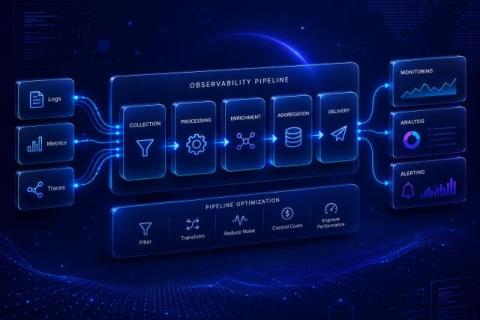
Modern engineering teams are drowning in telemetry data. A mid-sized Kubernetes cluster running 50 microservices can generate millions of log lines per minute. Add distributed traces, Prometheus metrics, cloud provider events, and application-level instrumentation and you're looking at terabytes of observability data every day. The problem isn't just volume. It's what you do with it.

What is Service Request Management? A Complete Guide

If you run a service desk, you’ve likely seen this pattern: Service requests, incidents, and change requests often end up in the same queue under the same SLA, even though they require different handling. Many requests that could be resolved through self-service still go through manual intervention, while misclassification adds further delays and confusion. Service request management brings structure to this by defining how requests are handled end to end.