Operations | Monitoring | ITSM | DevOps | Cloud

How to measure developer experience (DevEx) in the AI era

As AI coding assistants dramatically inflate PR counts, commit frequency, and lines of code, the limitations of individual output metrics have never been more apparent. A developer can now produce significantly more lines per session, but higher volume doesn’t guarantee that the code is stable, maintainable, or successfully running in production. GitClear analyzed over 200 million lines of code and found that code churn nearly doubled following widespread AI adoption.

Why Traditional Observability Breaks Down in Hybrid Cloud Environments

Hybrid cloud has reshaped the way enterprises build, run, and troubleshoot digital services. Applications now stretch across on-premises infrastructure, cloud platforms, regional services, interconnects, and distributed dependencies that change constantly. Operational complexity has expanded with that footprint, yet many observability practices still reflect assumptions from an earlier era of simpler architectures and clearer boundaries. That gap shows up fast during an incident.

Monitor your Render services with AppSignal

AppSignal now supports Render's Metrics Stream. Configure it once in your Render workspace and Render forwards OpenTelemetry metrics to the AppSignal Collector. From there, the metrics show up in your AppSignal app as host metrics and automated dashboards. You only have to set up the stream once per workspace.

A Runnable Reference Architecture for Industrial IoT on InfluxDB 3

Industrial teams keep telling us the same thing: the data is there, but the stack to act on it isn’t. PLCs, CNCs, SCADA systems, vibration sensors, and quality stations all generate high-frequency telemetry that gets stranded in proprietary historians or stitched together with point integrations nobody wants to own. By the time anyone looks at it, the moment to act has passed.

The New Agentic AI Job Roles IT Leaders Need

CIOs are under pressure from every direction. Budgets remain tight, geopolitical uncertainty is forcing organizations to rethink resilience, and workforce expectations continue to evolve. At the same time, AI is accelerating a broader shift across enterprise IT – changing not only how organizations operate, but also the skills and roles they will increasingly depend on. The question is not whether AI will reshape IT teams, but how quickly organizations can adapt to these new ways of working.
Sponsored Post

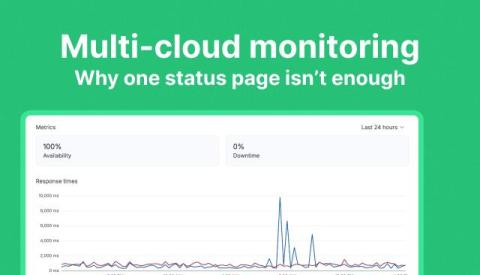
Multi-Cloud Monitoring And Why Status Pages Aren't Enough

Multi-cloud environments make outage detection harder. Relying on individual status pages from Amazon Web Services, Google Cloud Platform, and Microsoft Azure often leads to delayed, incomplete, or conflicting signals during incidents. This article explains how fragmented visibility impacts incident response, and how aggregating status across cloud and SaaS dependencies helps DevOps teams detect outages faster and respond with confidence.

The "Single Pane of Glass" Is Dead - What Network Teams Actually Need Is Intelligence

The infrastructure industry spent two decades chasing a single pane of glass. The future looks different: domain-expert AI platforms that reason deeply within their own data, connected through tool chaining when problems cross boundaries.

Generate test scripts from natural language with Grafana Assistant: introducing k6 Script Authoring

Performance testing is critical to ensure your applications stay reliable under load, but writing the scripts themselves often feels like a chore. Most engineers already know the scenario they want to test; the hard part is translating that intent into a working performance test. Even experienced developers who use k6 can lose time looking up syntax, configuring load stages and thresholds, or debugging boilerplate code before they can run a meaningful test.

Project and manage cloud spend with Datadog budget forecasting

Cloud and SaaS spending continues to grow across teams, services, and providers, changing too quickly for retrospective cost management workflows to keep up. Finance and engineering leaders often rely on last month’s reports or manually maintained spreadsheets, which don’t reflect current usage. As a result, teams lack context on how spend is trending and often discover budget overruns only after they’ve occurred.