Operations | Monitoring | ITSM | DevOps | Cloud

Swap Memory - When and How to Use It on Your Production Systems or Cloud-Provided VMs

Swap memory, also known as virtual memory, is a space on a hard disk that is used to supplement the physical memory (RAM) of a computer. The swap space is used when the system runs out of physical memory, and it moves less frequently accessed data from RAM to the hard disk, freeing up space in RAM for more frequently accessed data. But should swap memory be enabled on production systems and cloud-provided virtual machines (VMs)? Let's explore the pros and cons.

Understanding Context Switching and Its Impact on System Performance

Context switching is the process of switching the CPU from one process, task or thread to another. In a multitasking operating system, such as Linux, the CPU has to switch between multiple processes or threads in order to keep the system running smoothly. This is necessary because each CPU core without hyperthreading can only execute one process or thread at a time.

Understanding Linux CPU Consumption, Load, and Pressure for Performance Optimization

As a system administrator, understanding how your Linux system's CPU is being utilized is crucial for identifying bottlenecks and optimizing performance. In this blog post, we'll dive deep into the world of Linux CPU consumption, load, and pressure, and discuss how to use these metrics effectively to identify issues and improve your system's performance.

10 Mistakes to avoid when framing your IT Incident Management Strategy

An IT incident is an unplanned disruption that negatively impacts an IT service. As the importance of IT to the business has increased, the impact of IT incidents has become greater. IT incidents can result in revenue loss, loss of employee productivity, SLA financial penalties, government fines, and more. An effective IT incident management strategy is now essential in every organization. For a business like Amazon whose entire business relies on IT, a single second of slowness can cost over $15,000.

Empowering Security Teams: The Importance of Data Control and Freedom of Choice

Enterprises are getting increasingly tired of feeling locked into vendors, and rightfully so. As soon as you put your observability data into a SaaS vendors’ storage, it’s now their data, and it’s difficult to get it out or reuse it for other purposes. As a result, strategic independence is becoming increasingly important as organizations decide what data management tools they’re going to invest time and resources into.

Cloud Provider Performance Monitoring: April 2023 Insights

Explore our insightful April 2023 report on the performance of top cloud providers. We've carefully assessed the health of these leading services by monitoring outages and issues throughout the month. Using data from their official status pages, we've normalized the information to create a clear and concise overview of their reliability. Find out how your favorite cloud provider stacks up in this essential report.

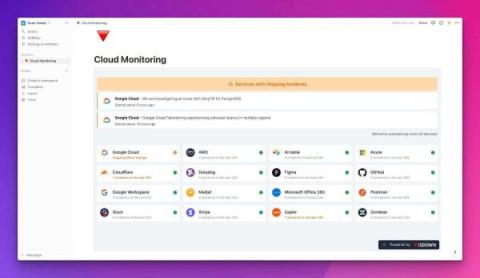
How to monitor cloud vendors with Notion and IsDown

In our modern business environment, it's important to stay updated on the status of the cloud services we use daily. Many companies depend on multiple cloud platforms for different aspects of their work, and having a single place to monitor them all can make a big difference. Notion, a popular all-in-one workspace tool, can help improve team communication, while IsDown makes it easy to track cloud vendors' status pages.