Operations | Monitoring | ITSM | DevOps | Cloud

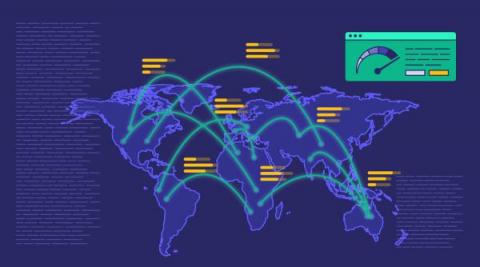
VoIP Monitoring 101: Keeping Your Calls Crystal Clear

Are you tired of sounding like a robot on your VoIP calls? Or maybe you're just sick of hearing your colleagues sound like they're calling from the bottom of a well? Fear not, my friends, for the solution to your VoIP woes is here! Introducing VoIP Monitoring 101: Keeping Your Calls Crystal Clear. In this article, we'll break down everything you need to know about VoIP monitoring - from what it is to why it matters - so you can say goodbye to poor call quality and hello to crystal-clear conversations.
Checkly CLI is Now GA, and We've Launched Our New Website and Branding

We believe monitoring should be set up as code and live in your repository. Today, we are thrilled to announce that our Checkly CLI is now available to everyone! The CLI is our native tool enabling monitoring as code (MaC). This is a significant achievement for us, and we owe it to our users who beta-tested the CLI and gave us valuable feedback over the past few weeks.

Announcing Checkly CLI GA and Test Sessions Beta

Today the Checkly CLI is generally available. Together with its companion — the new test sessions screen (in beta) — this marks a big milestone for us at Checkly and our users. We already talked about monitoring as code and the CLI during its alpha and beta testing phases but here is a short recap. With the Checkly CLI you have the most powerful monitoring as code workflow at your fingertips.

The Importance of an API Observability Pipeline for SaaS Tools

Third-party APIs and cloud based software as a service (SaaS) tools have become a cornerstone of modern enterprises. It is essential to monitor log data and optimize API performance. This will ensure that development teams provide the desired advantages to clients and users. To address this challenge, businesses can use an observability pipeline. It is a set of tools and processes that monitor and analyze data from various sources. That includes third-party APIs and SaaS tools.

How to Choose the Best CDN Monitoring Tool for Your Needs

Rich content like videos and graphics used to cause network congestion and long load times when all the content was stored on a centrally located server. Fortunately, Content Delivery Networks (CDNs) came to the rescue in the late 1990s, letting users load rich content from a location geographically closer to them and reducing load times by distributing a cached version of content across servers worldwide.

Tame the performance of code you didn't write: A journey into stable diffusion

In our daily lives as developers, we have to deal with a lot of code that we did not write ourselves (or wrote ourselves but already forgot that we did). We use tons of libraries that make our lives easier because they deal with complex stuff like machine learning, time zones, or printing. As a result, much of the code base we work with on a daily basis is a black box to us. But there are times when we need to learn what is happening in that black box.

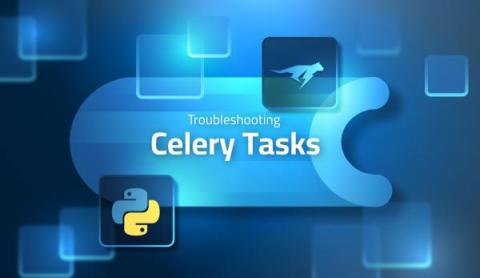
A Comprehensive Guide to Troubleshooting Celery Tasks with Lightrun

This article explores the challenges associated with debugging Celery applications and demonstrates how Lightrun’s non-breaking debugging mechanisms simplify the process by enabling real-time debugging in production without changing a single line of code.

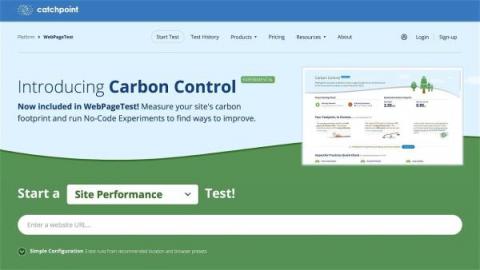
Building a Greener Digital Future: Catchpoint Launches Carbon Control

In our quest for a greener planet, we have become increasingly aware of the detrimental effects of single-use products like plastic bottles, coffee cups, and plastic bags on greenhouse gas emissions. However, there exists an ominous carbon culprit that goes largely unnoticed—the carbon footprint of the Internet.

Mythbusting IPv6 with Jan Zorz, and Why IPv6 Adoption is Slow

IPv6 was developed in the late 1990s as a successor to IPv4 in response to widespread concerns about the growth of the Internet and its potential impact on the existing IPv4 address protocol, in particular potential address exhaustion. It was assumed that after some time as a dual-stack solution, we would phase out IPv4 entirely. Almost twenty-five years later, however, we are approaching full-scale depletion of IPv4 addresses, in part because IPv6 adoption is still lagging.

Ask Miss O11y: To Metric or to Trace?

Dear Miss O11y, I remember reading quite interesting opinions from you about usage of metrics and traces in an application. Did you elaborate on those points in a blog post somewhere, so I can read your arguments to forge some advice for myself? I must admit that I was quite puzzled by your stance regarding the (un)usefulness of metrics compared to traces in apps in some contexts (debugging).