Operations | Monitoring | ITSM | DevOps | Cloud

Recap of Icinga Camp Berlin 2023

It was a nice sunny morning, the weather really with us, for our Icinga Camp Berlin this year. When I peeked outside after helping with the setup, people were already mingling, getting ready to check in and get their first coffee to prepare for the day ahead. Bernd took the stage, welcoming everyone with genuine enthusiasm, setting the tone for what promised to be an engaging event. Surrounded by our community, I felt right at home – ready to dive into the talks and connect with new friends.
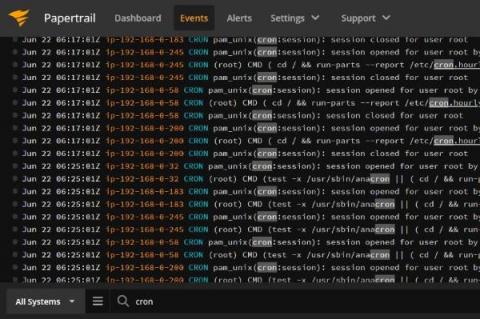

Hello cron job monitoring & alerts, goodbye silent failures

Papertrail has had the ability to alert on searches that match events for years, but what about when they don’t? When a cron job, backup, or other recurring job doesn’t run, it’s not easy to notice the absence of an expected message. But now, Papertrail can do the noticing for you with inactivity alerts. Papertrail inactivity alerts allow you to setup notifications when searches don’t match events.

How Our Love of Dogfooding Led to a Full-Scale Kubernetes Migration

The benefits of going cloud-native are far reaching: faster scaling, increased flexibility, and reduced infrastructure costs. According to Gartner®, “by 2027, more than 90% of global organizations will be running containerized applications in production, which is a significant increase from fewer than 40% in 2021.” Yet, while the adoption of containers and Kubernetes is growing, it comes with increased operational complexity, especially around monitoring and visibility.

No, You Haven't Missed the Streaming Telemetry Bandwagon - Part 1

Streaming telemetry holds the promise of radically improving the reliability and performance of today’s complex network infrastructures, but it does come with caveats. In the first of a new series, Kentik CEO Avi Freedman covers streaming telemetry’s history and original development.

Understanding Linux Logs: 16 Linux Log Files You Must be Monitoring

Logging provides a wealth of information about system events, errors, warnings, and activities. When troubleshooting issues, logs can be invaluable for identifying the root cause of problems, understanding the sequence of events leading to an issue, and determining the necessary steps for resolution. By regularly analyzing logs, administrators can identify performance bottlenecks, resource limitations, and abnormal system behavior.

A Strategic Approach to Replacing Data Historians

Recently, I wrote an article discussing why industrial organizations should migrate from legacy data historians to modern, open source technologies. The reasons for such a migration remain valid; however, it dawned on me that such a heavy-handed approach is not always right for every organization.

Using Data for Good: The Web Vitals Index

RapidSpike is committed to revolutionising website reliability, performance, and security — to make the web faster, safer, and easier for everyone to use. With the direct correlation between website speed and conversion now widely acknowledged, even marginal gains of 0.1% could represent millions of extra revenue for the UK’s largest brands.

Federated Data Explained: Empowering Privacy, Innovation & Efficiency

Data is like the oxygen that fuels the digital revolution. While critical and readily available, data becomes dangerous when misused. Leaders and users alike are becoming concerned with how organizations can protect data, especially personal information. It’s a complex and dynamic challenge, making it harder than ever to share data to the extent needed to facilitate innovation and research. To meet these challenges, many organizations are leveraging federated data systems.

Dynamic Observability Tools for API Live Debugging

Application Programming Interfaces (APIs) are a crucial building block in modern software development, allowing applications to communicate with each other and share data consistently. APIs are used to exchange data inside and between organizations, and the widespread adoption of microservices and asynchronous patterns boosted API adoption inside the application itself.