
Operations | Monitoring | ITSM | DevOps | Cloud

Improving the Elastic APM UI performance with continuous rollups and service metrics

In today's fast-paced digital landscape, the ability to monitor and optimize application performance is crucial for organizations striving to deliver exceptional user experiences. At Elastic, we recognize the significance of providing our user base with a reliable Observability platform that scales with you as you’re onboarding thousands of services that produce terabytes of data each day.
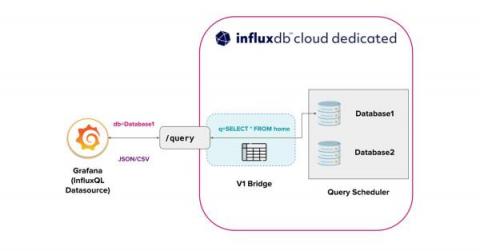

The Rebirth of InfluxQL in 3.0: A Quick Start Guide to Configuration and Usage

If we turn the clocks back to September 2013, we released InfluxQL alongside InfluxDB. InfluxQL is a SQL-like query language, specifically designed to query time series data. For many of our users, InfluxQL still remains the primary way they interact with InfluxDB. Based on this feedback, InfluxQL has been reborn in InfluxDB 3.0 alongside native support for the SQL query language. So what do I mean by reborn?

Graphite Metrics Delay: Why it Happens and What to Do

To understand why Graphite metrics delay occurs, we must first know what Graphite is. Graphite is an open-source tool used to track the performance of websites, applications, and network servers. It makes it simple to monitor, store, retrieve, and visualize numeric time-series data. While Graphite does make it easier to render graphs on-demand, the struggle of dealing with large amounts of data with minimum delay is real.

ManageEngine secures overall leadership position for Unified Endpoint Management in KuppingerCole Leadership Compass 2023

Attention, all tech enthusiasts! We are thrilled to announce that ManageEngine has once again been positioned as an Overall Leader for UEM in the KuppingerCole Leadership Compass. This marks the second consecutive time we have achieved this recognition. We have been acknowledged as leaders in all three leadership categories: Product Leadership, Innovative Leadership, and Market Leadership.

Watch Grafana 10 demos: New visualizations, plugin tools, and more from the latest Grafana release

With every major release of Grafana, we strive to give our users a broader, more powerful and more streamlined set of features for data visualization. Grafana 10, unveiled this month at GrafanaCON 2023, is certainly no exception. From more intuitive navigation to updated plugin development tools, Grafana 10 enhancements benefit new and seasoned users alike.

What is High Cardinality Data?

While reading a GitHub issue on the OpenTelemetry Collector about trying to send two versions of a metric, one with higher and one with lower cardinality, it occurred to me that we’ve never written on this blog about what is high-cardinality data exactly and how it matters to your OpenTelemetry observability. High-cardinality data refers to a dataset or data attribute that contains a large number of distinct values relative to the total number of data points.

Lightrun Attendance at FinOps X 2023: Unveiling Key Insights, Highlights and Takeaways from the Show

This week Lightrun attended the annual FinOps X event. The event was sold out and packed with great speakers, practitioners, and amazing atmosphere. Compared to last year which had over 300 attendees, this year the event brought over 1200! Above is a screenshot taken from the venue entrance reminding the audience with the core principles of FinOps.

Quick Fix: Updating Telegraf Configs to Send Data to InfluxDB 3.0

We recently introduced a new version of InfluxDB, rewritten from the ground up to improve performance across the board. As with any undertaking of this nature, developers will need to make some adjustments to their applications in order to incorporate the new database. We even faced this challenge internally. We had many Telegraf instances sending data to legacy versions of InfluxDB.

SD-WAN Monitoring: Why Edge-to-Edge Coverage Isn't Enough

In recent years, network operations teams have had to contend with several critical challenges, including: In response to these challenges, teams are increasingly turning to SD-WAN. The market for SD-WAN is massive, and continuing to grow, potentially reaching $47 billion by 2031. Through SD-WAN technologies, organizations are able to realize a number of benefits. However, these benefits aren’t a sure thing. In fact, many teams encounter challenges with their SD-WAN implementations.