Operations | Monitoring | ITSM | DevOps | Cloud

Maximizing VoIP performance: Why VoIP monitoring is vital for IT organizations

Voice over IP (VoIP) is a fairly old technology, brought into prominence during the 90s as an alternative to the hegemony of public switched telephone network (PSTN) telephony providers in the market. While VoIP was an alternative to normal telephone at that time, it soon led to a cascade of technological developments that changed the IT landscape. In a modern IT organization, VoIP-based technologies are indispensable.


Introduction to ELK Tech Stack

ELK Stack, also known as the Elastic Stack is a powerful and versatile open-source toolset that has revolutionized the way businesses manage and analyze their data. ELK Stack seamlessly integrates these three robust components to offer a comprehensive solution for searching, analyzing, and visualizing large volumes of data in real-time. So, buckle up, for a comprehensive overview of the ELK stack and its components, which will be a great starting point for beginners.

OpenTelemetry vs Prometheus

OpenTelemetry and Prometheus are both powerful observability tools, each with its own strengths. OpenTelemetry provides a standardized way to collect, instrument, and export telemetry data, while Prometheus excels at time-series monitoring and alerting. In this blog post, we will delve into the similarities and differences between OpenTelemetry and Prometheus, exploring the benefits and advantages of each.

Lower Your AWS Lambda Bill by Increasing Memory Size- yep!

Lambda allows you to allocate memory for your functions in increments of 1 MB, ranging from a minimum of 128 MB to a maximum of 10,240 MB (10 GB). When we specify the memory size for a Lambda function, AWS will allocate CPU proportionally. For example, a 256 MB function will receive twice the processing power of a 128 MB function.

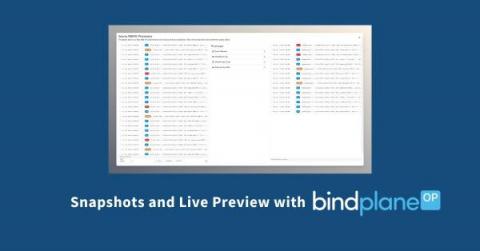
Transforming Your Telemetry Has Never Been Easier

As the foundation of your observability stack, BindPlane OP provides great visibility into your telemetry data, all the way from collection to its final destination. With the introduction of Live Preview in BPOP Enterprise, and a brand new processor workflow, we’ve now made this even better.

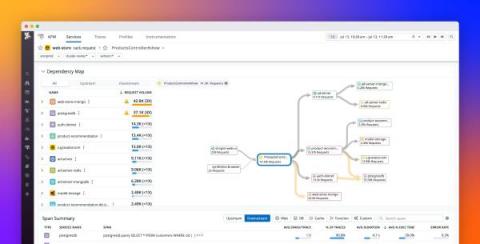
Pinpoint performance issues in downstream services with the Dependency Map Navigator

Visibility into the upstream and downstream dependencies of your services is key to maintaining a performant microservices environment. Application developers and SREs rely on this visibility to quickly trace issues back to the source, which is essential during incidents—when time is of the essence—throughout day-to-day operations, and as systems evolve and scale.

14 Critical Log Files You Need to Monitor for System Security

In the realm of Linux system administration, monitoring log files is essential for maintaining a healthy and secure environment. Linux distributions generate a multitude of log files that capture crucial information about system events, errors, and user activities. These log files act as a silent witness, providing valuable insights into the inner workings of a Linux system.

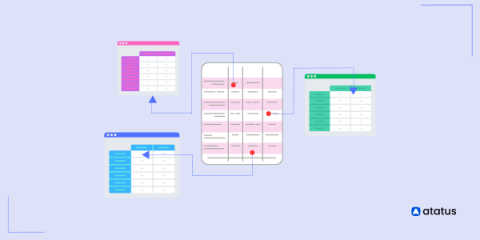
Relational Databases: Exploring Indexes and Transactions

Indexes serve as the key to unlocking the immense potential of relational databases, enabling swift and optimized data access. They act as a roadmap, allowing the database engine to locate specific data quickly, ultimately enhancing query performance. Understanding the nuances of indexes and employing the appropriate indexing techniques can significantly impact the efficiency of a database system.

The Invisible Threat: Understanding Domain Hijacking and Its Consequences

Did you notice when we announced the new domain expiration monitoring feature? Read on to see how it might come in handy to you. Domain names are the equivalent of real estate. But the right domain name can also be a money powerhouse. You probably paid as little as $20 for your domain name, but the biggest names out there cost a lot more than that. Trailing behind are: Shocking, isn’t it?